
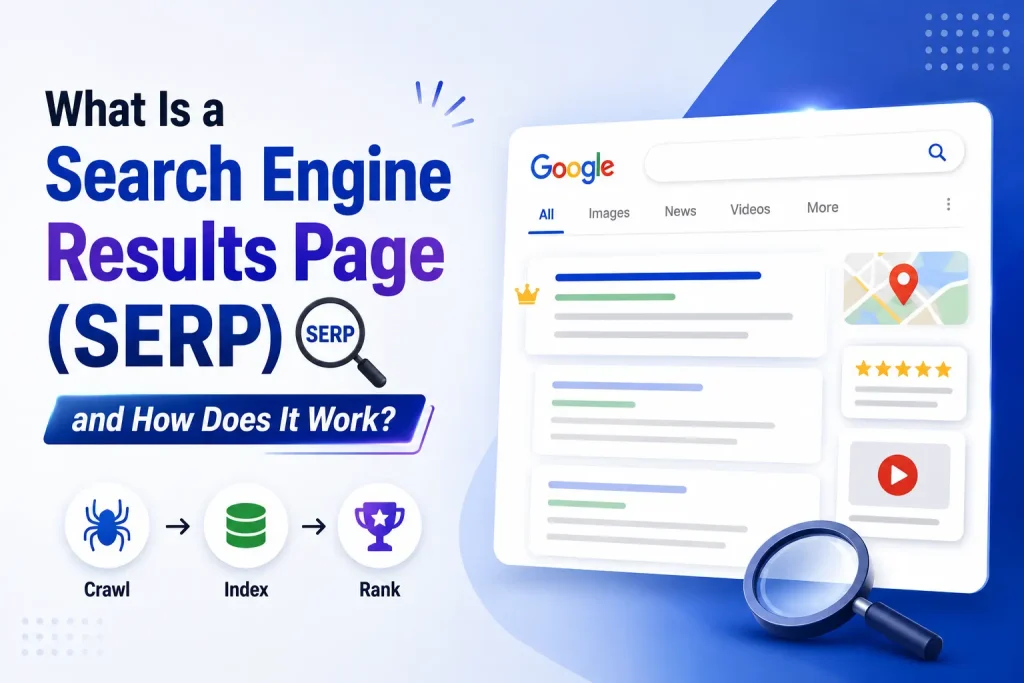
A Search Engine Results Page (SERP) is the page displayed by a search engine after a user enters a query. Whether someone searches for a product, service, answer, location, or topic, the results they see are presented on a SERP.
Understanding SERP meaning is important for businesses because search visibility directly affects how potential customers discover websites and information. A modern results page can contain much more than traditional website links, including paid advertisements, featured answers, maps, images, videos, and other search features.
In This Article
- What a Search Engine Results Page means
- How SERP works
- Common elements of a Google SERP
- The role of SERP in SEO
- Why SERP visibility matters for businesses
What Is a Search Engine Results Page?
A Search Engine Results Page is the collection of results returned by a search engine in response to a user’s query. The exact results can vary depending on the search intent, location, device, language, and the type of information being searched.
For example, someone searching for “best digital marketing agency” may see business listings and websites, while a search for “how SEO works” may display articles, videos, and direct answers.
In simple terms, the SERP connects a user’s search query with the most relevant available results.
How Does SERP Work?
To understand how SERP works, it helps to understand the basic search process. Search engines first discover and organize information from websites. When a user performs a search, the search engine evaluates available pages and determines which results are most relevant to that particular query.
The results are then presented in an order designed to match the user’s needs. Different queries can produce very different result pages because the search engine considers the meaning and intent behind the search.
This is why creating relevant, useful, technically accessible, and well-structured website content is an important part of Search Engine Optimization (SEO).
Common Elements of a Google SERP
A Google SERP can include several different result types. Common elements include:
- Organic search results – unpaid website listings that appear based on relevance.
- Paid advertisements – sponsored placements that may appear for commercial searches.
- Featured answers and rich results – enhanced information presented directly in search results.
- Local results – businesses and locations relevant to a local search.
- Images and videos – visual content shown when it matches the query.
Not every Search Engine Results Page contains the same features. The layout depends largely on what users are searching for.
What Does SERP Mean in SEO?
Understanding SERP in SEO means understanding where and how your website can appear when people search for relevant topics.
SEO is not simply about placing keywords on a page. Strong search visibility depends on factors such as content relevance, website quality, technical accessibility, user experience, and how effectively a page answers the searcher’s question.
Modern search experiences also increasingly present information in different formats, making clear, useful, and well-organized content valuable for both traditional search results and answer-focused search features.
Why Search Engine Rankings Matter for Businesses
Better visibility in relevant search engine rankings can help businesses reach people who are actively looking for their products, services, or information.
However, appearing on a SERP is only part of the goal. Businesses should focus on attracting the right audience by creating pages that match genuine search intent.
A well-planned SEO strategy can improve a website’s ability to compete for relevant search visibility while building a stronger long-term digital presence.
Frequently Asked Questions
1. What does SERP stand for?
SERP stands for Search Engine Results Page. It is the page displayed after a user enters a query into a search engine.
2. What is the difference between organic and paid SERP results?
Organic results appear based on search engine evaluation of relevance and quality, while paid results are advertisements displayed through advertising platforms.
3. Why does a Google SERP look different for different searches?
A Google SERP changes based on the search query and its intent. Different searches may trigger website results, maps, images, videos, shopping results, or other features.
4. How can SEO help improve SERP visibility?
SEO helps improve a website’s relevance, accessibility, content quality, and overall search readiness, which can support stronger visibility for relevant searches.
Conclusion
A Search Engine Results Page is where users discover information after performing an online search. Understanding how SERPs work helps businesses create content and websites that better match search intent and compete for meaningful visibility.
Rather than focusing only on rankings, businesses should aim to provide useful answers and a strong experience for the people they want to reach.
Build a Stronger Presence in Relevant Search Results
If your business wants to improve its visibility across relevant search results, a professional SEO strategy can help identify opportunities related to content, technical optimization, and search intent. TVM Info Solutions provides professional Search Engine Optimization (SEO) support for businesses looking to strengthen their digital presence and organic search visibility.
📞 Call Us: +919004590039
📧 Email: contact@tvminfo.com
Our Business Automation Solutions:
💬 ChatKar – Turn WhatsApp chats into sales: https://chatkar.com/
🌟 StarCreator – Build AI automations: https://starcreator.co/
📧 AutoMailSend – Own your email marketing: https://automailsend.com/
🎯 AttractLead – Capture & convert leads automatically: https://attractlead.in/