
Types of SEO Keywords: A Guide to Choosing the Right Keywords
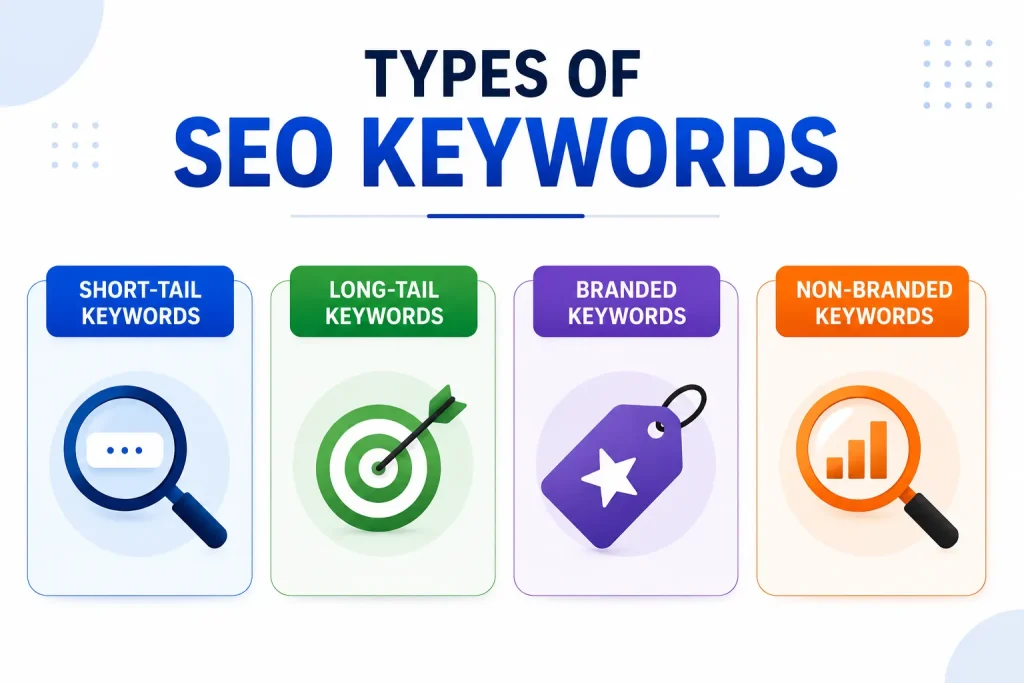
Understanding the types of SEO keywords is essential for creating content that matches what people are actually searching for. Keywords are not all used for the same purpose. Some users want information, some want to compare options, and others are ready to take action. By understanding different SEO keyword categories, businesses can create more relevant content, improve search visibility, and attract audiences with the right intent. In This Article What Are SEO Keywords? SEO keywords are words and phrases that people enter into search engines when looking for information, products, services, or solutions. Search engines use many signals to understand content, but keywords still help communicate the main topic and user intent of a page. The right keyword should match both the content topic and the reason behind the user’s search. Types of Search Keywords Based on Intent One of the most important ways to classify keywords is by search intent. Informational keywords are used when someone wants to learn something. Examples include “what is SEO“ or “how does keyword research work.” Navigational keywords are used when users want to find a specific website, brand, or page. Commercial investigation keywords are used when people are comparing options before making a decision. Searches such as “best SEO agency” or “SEO services” often fall into this category. Transactional keywords show a stronger intention to take action, such as purchasing a product, requesting a service, or contacting a business. Understanding these types of search keywords helps businesses create content that better matches user expectations. SEO Keyword Categories Based on Length Keywords can also be grouped by their length and level of specificity. Short-tail keywords are broad search terms, usually containing one or two words. For example, “SEO“ is a broad keyword with many possible meanings and search intentions. Long-tail keywords are longer and more specific phrases, such as “types of SEO keywords for small businesses.” These keywords often provide clearer context about what the user wants. Long-tail keywords can be useful for creating focused content around specific questions, needs, and topics. Branded and Non-Branded Keywords Another important category includes branded and non-branded keywords. Branded keywords include a company, product, or service name. Users searching for these terms usually already know about the brand. Non-branded keywords describe a general product, service, problem, or topic without mentioning a specific business. For example, “SEO services” is a non-branded search term. A balanced keyword strategy can use both categories depending on whether the goal is to build awareness, attract new audiences, or support existing brand searches. How to Choose the Right Type of SEO Keyword Choosing the right keywords starts with understanding your target audience, business goals, and search intent. Focus on finding relevant keywords that genuinely connect with your products, services, or content. When learning how to find target keywords, consider what questions customers ask and what information they need at different stages of their decision-making process. Effective keyword research should help you create useful, focused content rather than simply adding popular phrases to a page. Frequently Asked Questions Q1. What are the main types of SEO keywords? Ans: The main types of SEO keywords can be categorized by search intent, length, specificity, and branding. Q2. What is the difference between short-tail and long-tail keywords? Ans: Short-tail keywords are broad and general, while long-tail keywords are more specific and provide clearer context about what the user is searching for. Q3. Why is search intent important when choosing keywords? Ans: Search intent helps you understand what the user expects to find. Matching content with intent can improve relevance and user experience. Q4. Which SEO keyword type is best? Ans: There is no single best keyword type. The right choice depends on your business goals, audience, content topic, and search intent. Conclusion Understanding the different types of SEO keywords helps businesses plan content around real search behavior. By considering intent, specificity, and relevance, you can build a more focused keyword strategy and create content that better serves your audience. Build a More Effective Keyword Strategy for Your Business Choosing the right keywords requires more than selecting popular search terms. A professional SEO strategy should consider search intent, audience needs, content relevance, and business goals. TVM Info Solutions provides professional Search Engine Optimization (SEO) support to help businesses develop stronger search strategies and improve their digital visibility. 📞 Call Us: +919004590039📧 Email: contact@tvminfo.com Our Business Automation Solutions: 💬 ChatKar – Turn WhatsApp chats into sales: https://chatkar.com/🌟 StarCreator – Build AI automations: https://starcreator.co/📧 AutoMailSend – Own your email marketing: https://automailsend.com/🎯 AttractLead – Capture & convert leads automatically: https://attractlead.in/