
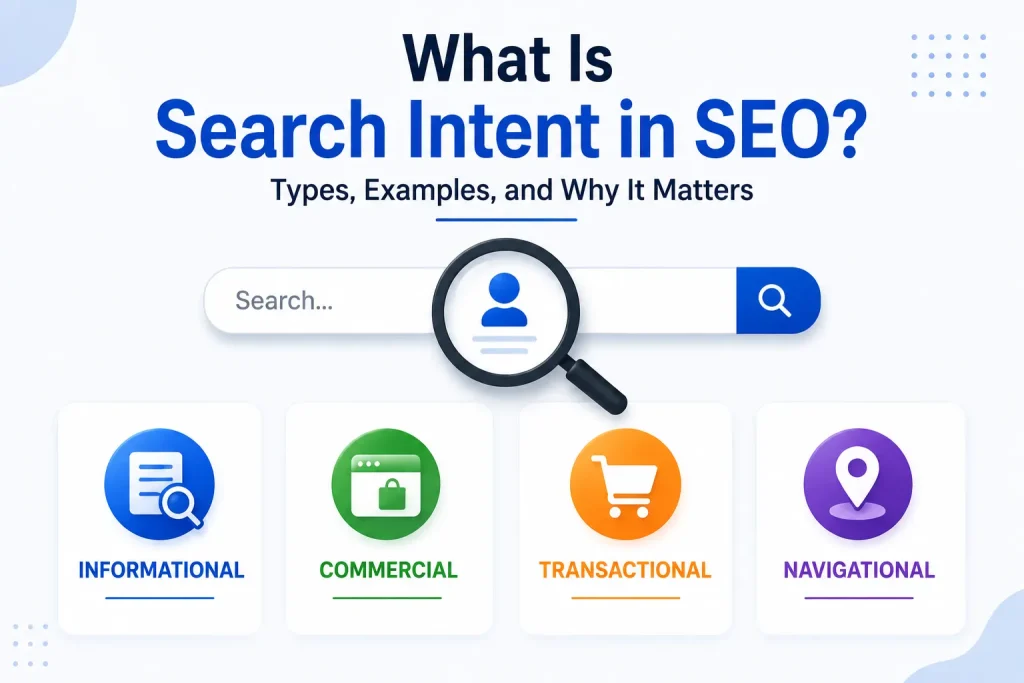
Search Intent in SEO refers to the purpose behind a user’s search query. In simple terms, it helps businesses understand what a person actually wants to find when they type something into a search engine.
Understanding user intent in SEO is essential because creating content around the right keywords alone is not enough. Your page must also provide the type of information, product, service, or solution the user expects. This article explains what is search intent, its main types, practical examples, and why it matters for an effective SEO strategy.
In This Article
- What search intent means
- The main types of search intent
- Search intent examples
- Why search intent matters for SEO
- How businesses can optimize content for user intent
What Is Search Intent?
When people ask what is search intent, the simplest answer is that it is the reason behind a search.
For example, someone searching for “what is SEO” wants information. However, someone searching for “SEO agency near me” is likely looking for a service provider.
Both searches may relate to SEO, but the user’s purpose is completely different. Understanding this difference helps businesses create content that better matches what users are looking for.
The Main Types of Search Intent
Search intent is commonly divided into four main categories:
Informational Intent: The user wants to learn something. Searches such as “search intent examples” or “how does SEO work” fall into this category.
Navigational Intent: The user wants to visit a specific website, brand, or page. For example, searching for a company’s name usually indicates navigational intent.
Commercial Investigation: The user is researching options before making a decision. Searches such as “best SEO services for businesses” show that the person is comparing solutions.
Transactional Intent: The user is ready to take action, such as buying a product, booking a service, or submitting an inquiry.
Search Intent Examples and How They Work
Understanding search intent examples makes the concept easier to apply.
A search for “best digital marketing strategies” usually requires an informative article. A search for “digital marketing agency Mumbai” is more likely to require a service-focused page.
Before creating content, businesses should consider:
- What question is the user trying to answer?
- What type of content appears relevant to the query?
- Is the user learning, comparing, or ready to take action?
The answers help determine whether the page should be a blog, service page, product page, comparison guide, or another content format.
Why Search Intent Matters for SEO
A strong SEO strategy should focus on relevance, not simply keyword placement. If a user searches for information and lands on a page that immediately tries to sell something, the content may fail to meet their expectations.
Matching user intent in SEO can help businesses create more useful content and improve the overall search experience. It also helps organize a website around different stages of the customer journey.
For modern search environments, clear and well-structured content can also make it easier for search systems and users to understand the purpose of a page.
How to Optimize Content for Search Intent
Start by analyzing the search query and the user’s likely objective. Then create content that directly addresses that need.
Use clear headings, relevant information, practical examples, and an appropriate content format. Avoid adding unnecessary promotional content when the user is simply looking for an answer.
For businesses, understanding the difference between keywords and search intent can lead to better content planning. Keywords tell you what people are searching for, while intent helps explain why they are searching.
Frequently Asked Questions
1. What is search intent in SEO?
Search intent in SEO is the purpose behind a user’s search query. It helps determine what type of content the user expects to find.
2. What are the four types of search intent?
The four common types are informational, navigational, commercial, and transactional intent.
3. Why is search intent important for SEO?
Search intent is important because it helps businesses create content that matches user expectations and provides more relevant answers.
4. How can I identify search intent?
You can identify intent by analyzing the wording of the search query and considering whether the user wants information, a specific website, a comparison, or to take action.
Conclusion
Understanding Search Intent in SEO helps businesses move beyond simple keyword targeting. By identifying what users genuinely want and creating content that matches their needs, websites can provide a better and more relevant search experience.
Build a More User-Focused SEO Strategy
Creating content that matches the right search intent requires thoughtful keyword research, content planning, and SEO strategy. TVM Info Solutions provides professional Search Engine Optimization (SEO) support for businesses looking to improve their website’s relevance and search visibility through a structured approach.
📞 Call Us: +919004590039
📧 Email: contact@tvminfo.com
Our Business Automation Solutions:
💬 ChatKar – Turn WhatsApp chats into sales: https://chatkar.com/
🌟 StarCreator – Build AI automations: https://starcreator.co/
📧 AutoMailSend – Own your email marketing: https://automailsend.com/
🎯 AttractLead – Capture & convert leads automatically: https://attractlead.in/

Pingback: How to Find High Search Volume Keywords for SEO
Pingback: Primary and Secondary Keywords: What Is the Difference?
Pingback: How to Write SEO-Friendly Content: A Practical Guide