
Author name: admin

How to Find Low-Competition Keywords for Better SEO Opportunities
SEO

How to Find Low-Competition Keywords for Better SEO Opportunities

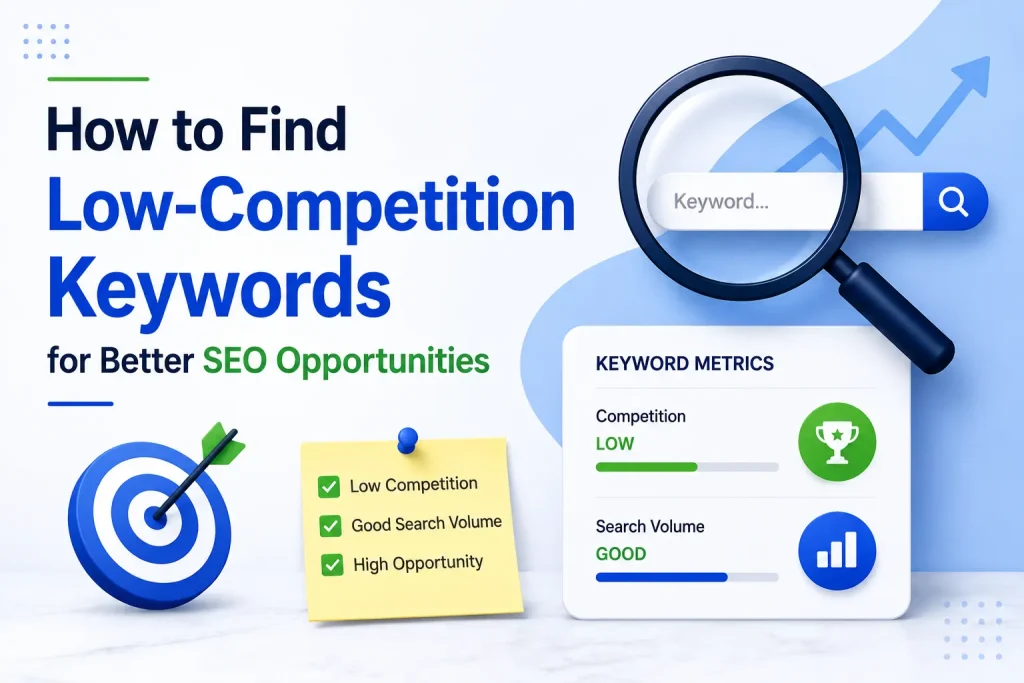
Finding the right keywords is not only about choosing terms with high search volume. Businesses also need to identify realistic opportunities where their content can compete. Learning how to Find Low-Competition Keywords can help you discover relevant search terms that match your audience’s needs while facing less competition from established websites. A strong keyword strategy combines relevance, search intent, competition, and content quality. Here is a practical approach to finding valuable keyword opportunities. In This Article What Are Low-Competition Keywords? Low-competition keywords are search terms where it may be comparatively easier to compete in search results than highly competitive terms. However, low competition does not automatically mean a keyword is valuable. The best opportunities are usually relevant to your business, match a clear user need, and can be supported with useful content. For example, a broad keyword may be highly competitive, while a more specific long-tail search query can have clearer intent and fewer competing pages targeting exactly that topic. Start With Low-Competition Keyword Research Effective low-competition keyword research starts with understanding what your audience searches for. Begin by listing your products, services, customer problems, and common questions. You can then explore: These sources can reveal specific phrases that people may use when searching for information, solutions, or services. Instead of targeting only broad terms, look for detailed queries that address a particular problem. These often create useful keyword research opportunities for businesses building topical authority. How to Find Easy-to-Rank Keywords When learning how to find easy-to-rank keywords, look beyond a keyword difficulty score. SEO tools can provide useful estimates, but you should also manually review the search results. Search the keyword and examine: If the existing results are weak, outdated, poorly focused, or incomplete, there may be an opportunity to create more helpful content. The goal is not simply to find a keyword with the lowest competition. The goal is to identify searches where your business can provide a genuinely valuable answer. Perform Keyword Competition Analysis A proper keyword competition analysis helps you understand what you are competing against. Look at the top-ranking pages and ask whether your website can realistically create content that is equally useful or better suited to the user’s needs. Consider factors such as content relevance, search intent, website authority, and topic coverage. Also, avoid judging competition based on one metric alone. A keyword may have a low difficulty score but still be dominated by highly relevant, authoritative pages. Combining tool-based research with manual SERP analysis gives you a more practical view of the opportunity. Choose Keywords That Support Your Business Goals The best keywords should connect with your target audience and business objectives. A highly searchable phrase is not useful if it attracts visitors who are unlikely to benefit from your products or services. Build content around related keyword groups rather than creating separate pages for every small variation. This helps create stronger, more comprehensive content that addresses the topic naturally. For long-term SEO, focus on creating useful pages that satisfy search intent instead of chasing keyword difficulty alone. Frequently Asked Questions Q1. What is a low-competition keyword? Ans: A low-competition keyword is a search term that may be easier to compete for compared with highly competitive keywords, depending on the quality and strength of existing search results. Q2. How do I find low-competition keywords for SEO? Ans: You can use keyword research tools, Google search suggestions, related searches, customer questions, and manual SERP analysis to identify relevant opportunities. Q3. Are low-competition keywords always easy to rank for? Ans: No. Competition scores are estimates. Actual ranking difficulty also depends on search intent, content quality, relevance, and competing websites. Q4. Should I target only low-competition keywords? Ans: No. A balanced keyword strategy can include low-competition opportunities alongside broader and more competitive terms that are relevant to your business. Conclusion Learning how to Find Low-Competition Keywords requires more than selecting terms with a low difficulty score. The strongest opportunities combine relevance, realistic competition, clear search intent, and genuine business value. A thoughtful keyword strategy can help businesses create more focused content and identify opportunities worth pursuing. Build a Smarter Keyword Strategy for Your Business Finding the right keyword opportunities requires careful research and a clear understanding of your audience and search landscape. TVM Info Solutions provides professional Search Engine Optimization (SEO) support to help businesses develop relevant strategies for improving their search visibility and digital presence. πŸ“ž Call Us: +919004590039πŸ“§ Email: contact@tvminfo.com Our Business Automation Solutions: πŸ’¬ ChatKar – Turn WhatsApp chats into sales: https://chatkar.com/🌟 StarCreator – Build AI automations: https://starcreator.co/πŸ“§ AutoMailSend – Own your email marketing: https://automailsend.com/🎯 AttractLead – Capture & convert leads automatically: https://attractlead.in/
Types of Search Intent A Guide to Understanding User Searches
SEO

Types of Search Intent: A Guide to Understanding User Searches

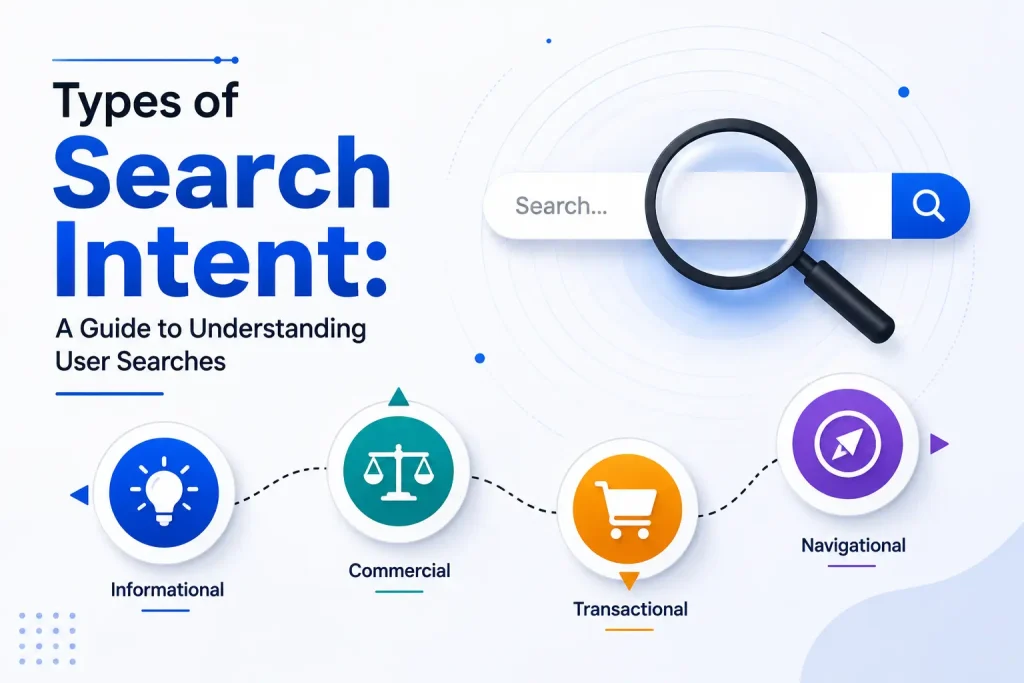
Understanding Types Of Search Intent helps businesses create content that matches what people actually want when they search online. A keyword alone does not explain the complete purpose behind a search. The words a user types often reveal whether they want information, a specific website, product comparisons, or are ready to take action. By understanding the different types of search intent, businesses can create more relevant content, improve the user experience, and build a stronger SEO strategy. In This Article What Is Search Intent? Search intent, also called user intent in SEO, is the purpose behind a person’s search query. It explains what the user expects to find after entering specific words into a search engine. For example, someone searching for β€œwhat is SEO” wants information, while someone searching for β€œSEO agency near me” is likely looking for a service provider. Understanding this difference helps marketers choose the right content format and message for each keyword. The Four Main Types of Search Intent 1. Informational Search Intent Informational search intent occurs when users want to learn about a topic or find an answer to a question. Common examples include: These searches are usually best served with blog articles, guides, tutorials, and educational content. The goal is to provide a clear and useful answer rather than immediately push a sale. 2. Navigational Search Intent Navigational search intent occurs when users want to visit a specific website, brand, or online destination. Examples include: The user already knows where they want to go. Businesses should make sure their brand pages and website navigation are easy to find and understand. 3. Commercial Search Intent Commercial search intent means the user is researching options before making a decision. They may be comparing products, services, brands, or providers. Examples include: These users are interested in a solution but may need more information before taking the next step. Service pages, comparison content, reviews, and detailed guides can help address this stage of the decision-making process. 4. Transactional Search Intent Transactional search intent indicates that the user is ready to complete an action. This could include making a purchase, booking a service, requesting a quote, or signing up. Examples include: For these searches, businesses should provide clear calls to action, relevant landing pages, and a simple path for users to complete their intended action. Why Do Types of Search Intent Matter for SEO? Choosing keywords without understanding search intent can lead to content that does not match the user’s expectations. A detailed educational article may not satisfy someone looking to purchase a service, while a sales-focused page may not help someone searching for basic information. By analyzing Types Of Search Intent, businesses can create content that better matches the user’s journey. This improves content relevance and helps build a more effective Search Engine Optimization (SEO) strategy. Modern search experiences also increasingly focus on providing direct and relevant answers. Creating clear, well-structured, answer-focused content can therefore support both traditional search visibility and evolving AI-powered search experiences. How Businesses Can Use Search Intent in Their Content Strategy Before creating content, identify the purpose behind the target keyword. Ask whether the user wants to learn, find, compare, or take action. Then match the content format to that purpose. Educational searches may require blogs, commercial searches may benefit from comparison pages, and transactional searches need focused service or landing pages. A strong content strategy considers the user’s needs at every stage instead of using the same approach for every keyword. Frequently Asked Questions 1. What are the four types of search intent? The four main types are informational, navigational, commercial, and transactional search intent. Each represents a different reason behind a user’s search. 2. Why is search intent important in SEO? Search intent in SEO helps businesses create content that matches what users expect to find, improving relevance and the overall search experience. 3. How can I identify the search intent of a keyword? Look at the wording of the keyword and consider what the user wants to achieve. Search terms may indicate whether they want information, a website, comparisons, or an action. 4. Can one keyword have more than one search intent? Yes. Some keywords can have mixed intent, especially broad terms. Reviewing the search context and the type of content users expect can help determine the most relevant approach. Conclusion Understanding the different types of search intent is an essential part of creating useful SEO content. Whether users are looking for information, a specific website, comparisons, or a transaction, the content should match their purpose as closely as possible. A search-intent-focused approach helps businesses create more relevant content and develop a stronger connection between keywords, content, and user needs. Build an SEO Strategy Around Real User Intent A successful SEO strategy requires more than selecting relevant keywords. Businesses also need to understand what their audience expects from every search. TVM Info Solutions provides professional SEO support and digital marketing strategies for businesses looking to create more relevant, user-focused search experiences and strengthen their online visibility. πŸ“ž Call Us: +919004590039πŸ“§ Email: contact@tvminfo.com Our Business Automation Solutions: πŸ’¬ ChatKar – Turn WhatsApp chats into sales: https://chatkar.com/🌟 StarCreator – Build AI automations: https://starcreator.co/πŸ“§ AutoMailSend – Own your email marketing: https://automailsend.com/🎯 AttractLead – Capture & convert leads automatically: https://attractlead.in/
What Is Search Intent in SEO Types Examples and Why It Matters
SEO

What Is Search Intent in SEO? Types, Examples, and Why It Matters

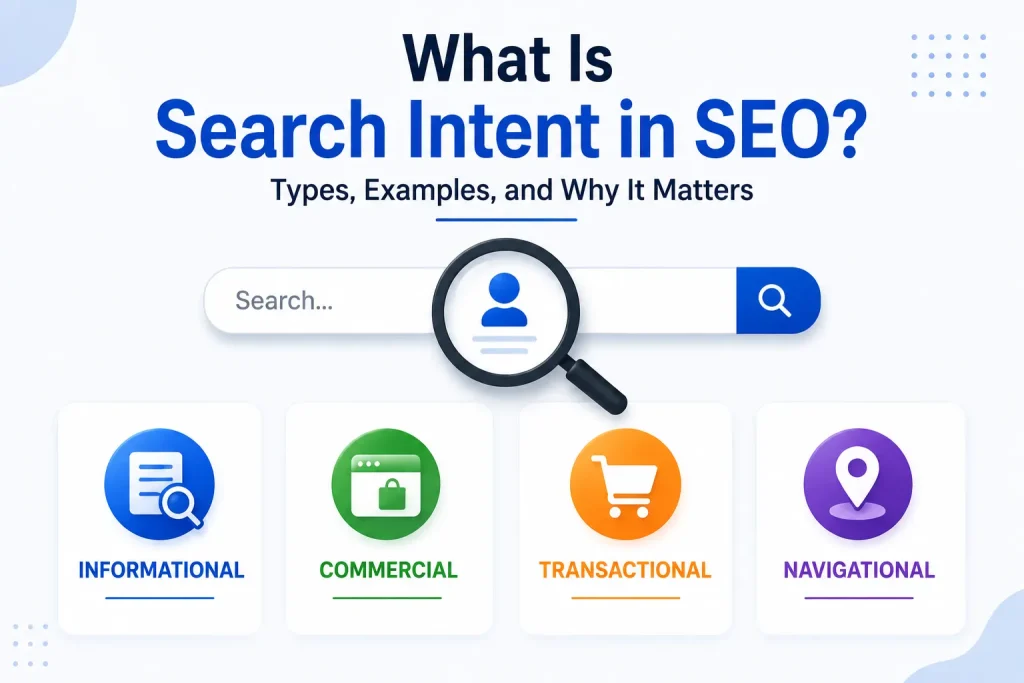
Search Intent in SEO refers to the purpose behind a user’s search query. In simple terms, it helps businesses understand what a person actually wants to find when they type something into a search engine. Understanding user intent in SEO is essential because creating content around the right keywords alone is not enough. Your page must also provide the type of information, product, service, or solution the user expects. This article explains what is search intent, its main types, practical examples, and why it matters for an effective SEO strategy. In This Article What Is Search Intent? When people ask what is search intent, the simplest answer is that it is the reason behind a search. For example, someone searching for β€œwhat is SEO” wants information. However, someone searching for β€œSEO agency near me” is likely looking for a service provider. Both searches may relate to SEO, but the user’s purpose is completely different. Understanding this difference helps businesses create content that better matches what users are looking for. The Main Types of Search Intent Search intent is commonly divided into four main categories: Informational Intent: The user wants to learn something. Searches such as β€œsearch intent examples” or β€œhow does SEO work” fall into this category. Navigational Intent: The user wants to visit a specific website, brand, or page. For example, searching for a company’s name usually indicates navigational intent. Commercial Investigation: The user is researching options before making a decision. Searches such as β€œbest SEO services for businesses” show that the person is comparing solutions. Transactional Intent: The user is ready to take action, such as buying a product, booking a service, or submitting an inquiry. Search Intent Examples and How They Work Understanding search intent examples makes the concept easier to apply. A search for β€œbest digital marketing strategies” usually requires an informative article. A search for β€œdigital marketing agency Mumbai” is more likely to require a service-focused page. Before creating content, businesses should consider: The answers help determine whether the page should be a blog, service page, product page, comparison guide, or another content format. Why Search Intent Matters for SEO A strong SEO strategy should focus on relevance, not simply keyword placement. If a user searches for information and lands on a page that immediately tries to sell something, the content may fail to meet their expectations. Matching user intent in SEO can help businesses create more useful content and improve the overall search experience. It also helps organize a website around different stages of the customer journey. For modern search environments, clear and well-structured content can also make it easier for search systems and users to understand the purpose of a page. How to Optimize Content for Search Intent Start by analyzing the search query and the user’s likely objective. Then create content that directly addresses that need. Use clear headings, relevant information, practical examples, and an appropriate content format. Avoid adding unnecessary promotional content when the user is simply looking for an answer. For businesses, understanding the difference between keywords and search intent can lead to better content planning. Keywords tell you what people are searching for, while intent helps explain why they are searching. Frequently Asked Questions 1. What is search intent in SEO? Search intent in SEO is the purpose behind a user’s search query. It helps determine what type of content the user expects to find. 2. What are the four types of search intent? The four common types are informational, navigational, commercial, and transactional intent. 3. Why is search intent important for SEO? Search intent is important because it helps businesses create content that matches user expectations and provides more relevant answers. 4. How can I identify search intent? You can identify intent by analyzing the wording of the search query and considering whether the user wants information, a specific website, a comparison, or to take action. Conclusion Understanding Search Intent in SEO helps businesses move beyond simple keyword targeting. By identifying what users genuinely want and creating content that matches their needs, websites can provide a better and more relevant search experience. Build a More User-Focused SEO Strategy Creating content that matches the right search intent requires thoughtful keyword research, content planning, and SEO strategy. TVM Info Solutions provides professional Search Engine Optimization (SEO) support for businesses looking to improve their website’s relevance and search visibility through a structured approach. πŸ“ž Call Us: +919004590039πŸ“§ Email: contact@tvminfo.com Our Business Automation Solutions: πŸ’¬ ChatKar – Turn WhatsApp chats into sales: https://chatkar.com/🌟 StarCreator – Build AI automations: https://starcreator.co/πŸ“§ AutoMailSend – Own your email marketing: https://automailsend.com/🎯 AttractLead – Capture & convert leads automatically: https://attractlead.in/
Short Tail vs Long Tail Keywords Whats the Difference
SEO

Short-Tail vs Long-Tail Keywords: What’s the Difference?

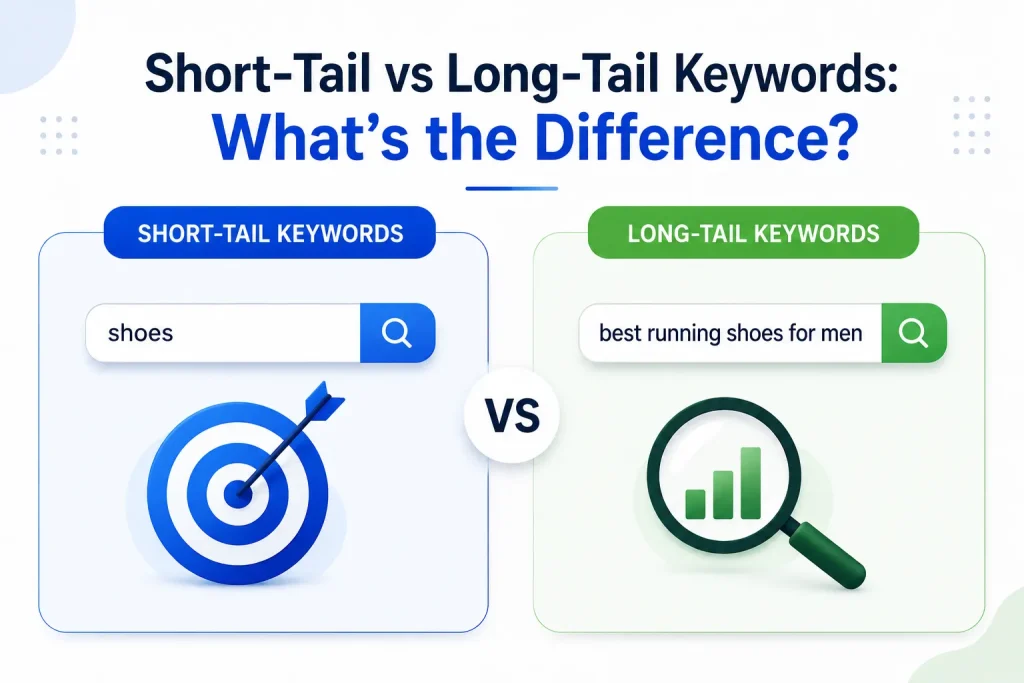
Choosing the right keywords is an important part of an effective SEO strategy. Understanding Short-Tail vs Long-Tail Keywords helps businesses create content that matches what people are actually searching for. While some keywords are broad and highly competitive, others are more specific and closely connected to user intent. This article explains the difference between short-tail and long-tail keywords, provides practical examples, and helps you understand when each keyword type can be useful. In This Article What Are Short-Tail Keywords? Short-tail keywords are broad search terms that usually contain one to three words. They describe general topics and can attract a wide range of searches. For example: These short-tail keyword examples have a broad meaning. Someone searching for SEO, for instance, could be looking for a definition, services, tools, courses, or general information. Because the search intent can vary significantly, short-tail keywords may be more competitive and require strong topical relevance to target effectively. What Are Long-Tail Keywords? Long-tail keywords are more specific search phrases, usually containing several words. They often provide clearer information about what the user wants. Some long-tail keyword examples include: These keywords are more detailed and can help businesses create content for a specific audience or requirement. A longer search phrase often provides stronger clues about the user’s search intent. Short-Tail vs Long-Tail Keywords: The Key Differences The main difference between short-tail keywords vs long-tail keywords is their level of specificity. Short-tail keywords are broad and can reach a larger audience. However, the audience may have different intentions behind the same search term. Long-tail keywords are more detailed and usually focus on a particular need, question, product, or service. For example: The second phrase clearly provides more context. This makes long-tail terms useful for creating focused, relevant content that answers specific user requirements. Neither keyword type is automatically better. The right choice depends on your business goals, audience, content topic, and search intent. When Should You Use Short-Tail Keywords? Short-tail keywords can be useful when building content around broad topics and important SEO keyword categories. They may work well for: For example, a comprehensive page about Search Engine Optimization (SEO) may naturally target broader keyword themes while covering related concepts in detail. The goal should not be to use broad keywords repeatedly. Instead, create useful content that establishes clear topical relevance. When Should You Use Long-Tail Keywords? Long-tail keywords are useful when your content answers a specific question or addresses a particular requirement. They can be effective for: For example, instead of creating generic content about digital marketing, a business could address a specific topic such as digital marketing strategies for local businesses. Using different types of SEO keywords strategically can help businesses build a more complete content structure around both broad topics and specific search queries. How to Choose Between Short-Tail and Long-Tail Keywords A strong keyword strategy usually considers both types of search terms. Start by understanding what your audience wants and the purpose of each page. Use short-tail keywords for broader topics where comprehensive coverage is required. Use long-tail keywords when addressing specific questions, services, or user needs. The most important factor is relevance. Your keywords should match the page content and provide useful information to the intended audience rather than being added simply for search visibility. Frequently Asked Questions Q1. What is the main difference between short-tail and long-tail keywords? Ans: The difference between short-tail and long-tail keywords is mainly specificity. Short-tail keywords are broad, while long-tail keywords are more detailed and targeted. Q2. Are long-tail keywords better for SEO? Ans: Long-tail keywords are not automatically better, but they can be useful for targeting specific user needs and creating focused content. Q3. How many words are in a short-tail keyword? Ans: A short-tail keyword usually contains one to three words, although keyword classification should focus more on specificity than an exact word count. Q4. Can a website use both short-tail and long-tail keywords? Ans: Yes. A well-planned SEO strategy can use both SEO keyword categories to cover broad topics and specific search queries across different pages. Conclusion Understanding Short-Tail vs Long-Tail Keywords helps businesses make better content and keyword decisions. Broad keywords can support major topics, while specific phrases can address clearer user requirements. The best approach is to focus on search intent, relevance, and useful content rather than choosing keywords based only on their length. Build a More Focused Keyword Strategy for Your Business Choosing the right keywords requires more than selecting popular search terms. A professional SEO strategy should consider your audience, business goals, search intent, and the topics your website needs to cover. TVM Info Solutions provides professional digital marketing and SEO support to help businesses build relevant strategies for stronger online visibility and sustainable digital growth. πŸ“ž Call Us: +919004590039πŸ“§ Email: contact@tvminfo.com Our Business Automation Solutions: πŸ’¬ ChatKar – Turn WhatsApp chats into sales: https://chatkar.com/🌟 StarCreator – Build AI automations: https://starcreator.co/πŸ“§ AutoMailSend – Own your email marketing: https://automailsend.com/🎯 AttractLead – Capture & convert leads automatically: https://attractlead.in/
Types of SEO Keywords A Guide to Choosing the Right Keywords
SEO

Types of SEO Keywords: A Guide to Choosing the Right Keywords

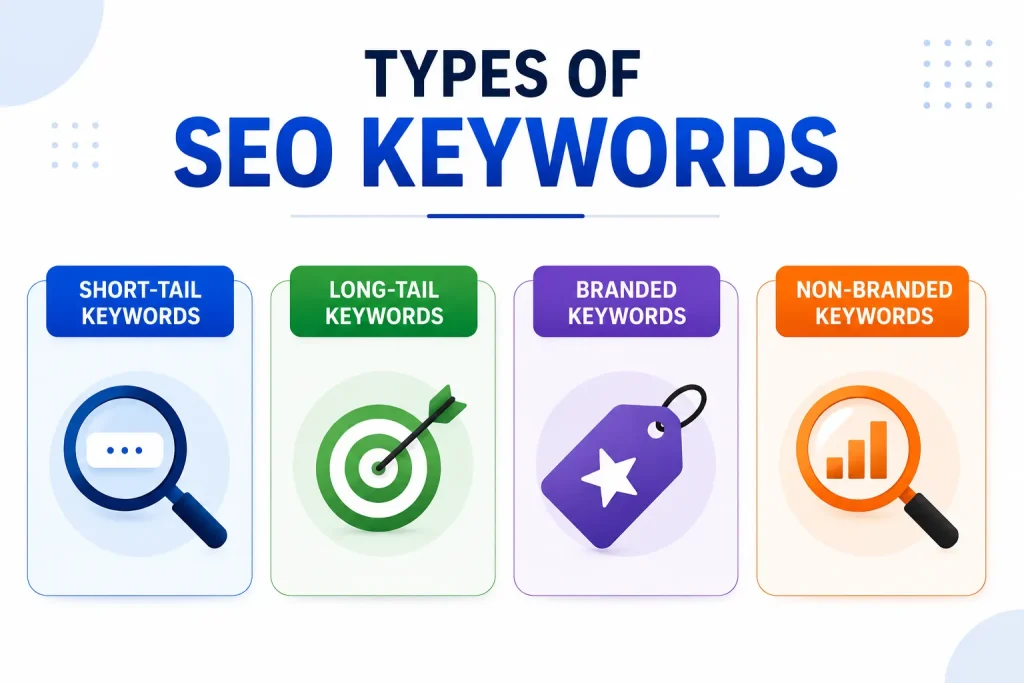
Understanding the types of SEO keywords is essential for creating content that matches what people are actually searching for. Keywords are not all used for the same purpose. Some users want information, some want to compare options, and others are ready to take action. By understanding different SEO keyword categories, businesses can create more relevant content, improve search visibility, and attract audiences with the right intent. In This Article What Are SEO Keywords? SEO keywords are words and phrases that people enter into search engines when looking for information, products, services, or solutions. Search engines use many signals to understand content, but keywords still help communicate the main topic and user intent of a page. The right keyword should match both the content topic and the reason behind the user’s search. Types of Search Keywords Based on Intent One of the most important ways to classify keywords is by search intent. Informational keywords are used when someone wants to learn something. Examples include “what is SEO“ or “how does keyword research work.” Navigational keywords are used when users want to find a specific website, brand, or page. Commercial investigation keywords are used when people are comparing options before making a decision. Searches such as “best SEO agency” or “SEO services” often fall into this category. Transactional keywords show a stronger intention to take action, such as purchasing a product, requesting a service, or contacting a business. Understanding these types of search keywords helps businesses create content that better matches user expectations. SEO Keyword Categories Based on Length Keywords can also be grouped by their length and level of specificity. Short-tail keywords are broad search terms, usually containing one or two words. For example, “SEO“ is a broad keyword with many possible meanings and search intentions. Long-tail keywords are longer and more specific phrases, such as “types of SEO keywords for small businesses.” These keywords often provide clearer context about what the user wants. Long-tail keywords can be useful for creating focused content around specific questions, needs, and topics. Branded and Non-Branded Keywords Another important category includes branded and non-branded keywords. Branded keywords include a company, product, or service name. Users searching for these terms usually already know about the brand. Non-branded keywords describe a general product, service, problem, or topic without mentioning a specific business. For example, “SEO services” is a non-branded search term. A balanced keyword strategy can use both categories depending on whether the goal is to build awareness, attract new audiences, or support existing brand searches. How to Choose the Right Type of SEO Keyword Choosing the right keywords starts with understanding your target audience, business goals, and search intent. Focus on finding relevant keywords that genuinely connect with your products, services, or content. When learning how to find target keywords, consider what questions customers ask and what information they need at different stages of their decision-making process. Effective keyword research should help you create useful, focused content rather than simply adding popular phrases to a page. Frequently Asked Questions Q1. What are the main types of SEO keywords? Ans: The main types of SEO keywords can be categorized by search intent, length, specificity, and branding. Q2. What is the difference between short-tail and long-tail keywords? Ans: Short-tail keywords are broad and general, while long-tail keywords are more specific and provide clearer context about what the user is searching for. Q3. Why is search intent important when choosing keywords? Ans: Search intent helps you understand what the user expects to find. Matching content with intent can improve relevance and user experience. Q4. Which SEO keyword type is best? Ans: There is no single best keyword type. The right choice depends on your business goals, audience, content topic, and search intent. Conclusion Understanding the different types of SEO keywords helps businesses plan content around real search behavior. By considering intent, specificity, and relevance, you can build a more focused keyword strategy and create content that better serves your audience. Build a More Effective Keyword Strategy for Your Business Choosing the right keywords requires more than selecting popular search terms. A professional SEO strategy should consider search intent, audience needs, content relevance, and business goals. TVM Info Solutions provides professional Search Engine Optimization (SEO) support to help businesses develop stronger search strategies and improve their digital visibility. πŸ“ž Call Us: +919004590039πŸ“§ Email: contact@tvminfo.com Our Business Automation Solutions: πŸ’¬ ChatKar – Turn WhatsApp chats into sales: https://chatkar.com/🌟 StarCreator – Build AI automations: https://starcreator.co/πŸ“§ AutoMailSend – Own your email marketing: https://automailsend.com/🎯 AttractLead – Capture & convert leads automatically: https://attractlead.in/
How to Do Keyword Research for SEO
SEO

How to Do Keyword Research for SEO: A Practical Step-by-Step Guide

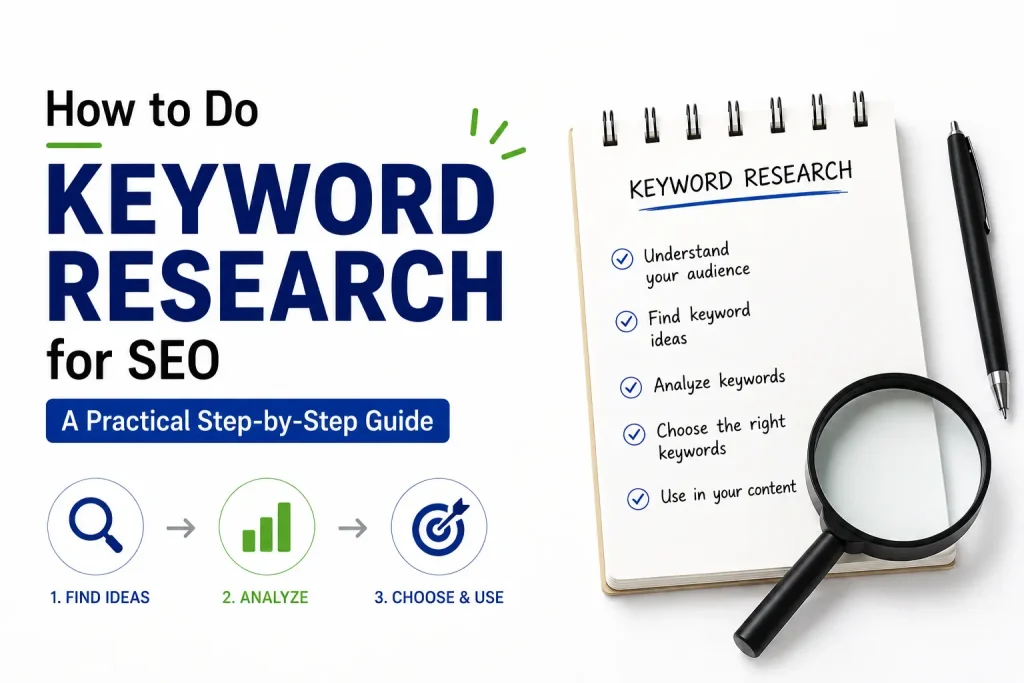
Keyword Research for SEO is the process of discovering the words and phrases people use when searching for information, products, or services online. Effective research helps businesses understand search intent, create relevant content, and target topics that match what their audience actually wants. Knowing how to conduct keyword research is an essential part of building a strong SEO strategy. This guide explains the practical steps involved, from understanding your audience to selecting the right keywords for your website. In This Article Understand Your Audience and Search Intent The first step in Keyword Research for SEO is understanding who you want to reach and what they are searching for. Think about the questions your potential customers may ask. For example, someone searching for β€œbest SEO services” may be looking for a service provider, while someone searching for β€œwhat is SEO” wants information. Understanding this difference helps you create content that matches the user’s search intent. Before selecting keywords, consider whether the search is informational, commercial, navigational, or transactional. Start Finding Relevant Keywords Begin with broad topics related to your business, products, services, or industry. These topics can become your starting points for finding relevant keywords. For example, an SEO agency might begin with topics such as: From these broad ideas, you can discover more specific search terms and questions. Look for variations, related phrases, and long-tail keywords that reflect what users genuinely want to know. Use Keyword Research Tools to Expand Ideas Keyword research tools can help you discover additional keyword opportunities and understand how people search for specific topics. These tools can be useful for identifying: However, tools should support your decision-making rather than replace it. A keyword may appear attractive based on data, but it should still be relevant to your business and audience. Analyze Keywords Before Choosing Your Targets Knowing how to find target keywords involves more than collecting a large list of phrases. Each keyword should be evaluated based on its relevance and the type of content required to satisfy the search. Ask these questions: A strong keyword research strategy focuses on relevance and user needs rather than simply targeting the highest-volume terms. Turn Keyword Research Into an SEO Content Strategy The final step in the keyword research process is organizing your selected keywords into useful topics and content opportunities. Group related keywords together and create content that answers the main topic comprehensively. Avoid creating separate pages for every small keyword variation when they have the same search intent. Good keyword research steps help businesses plan website pages, blog articles, and SEO content more strategically. The goal is to create useful content that clearly addresses what users are searching for. Frequently Asked Questions 1. What is the first step in keyword research? The first step is understanding your target audience, business topics, and the search intent behind the information your potential customers may be looking for. 2. Which tools can be used for keyword research? Various keyword research tools can help identify keyword ideas, related searches, trends, and search behavior. The right tool depends on your research requirements and SEO strategy. 3. How do I know which keywords to target? Choose keywords based on relevance, search intent, business goals, and your ability to create genuinely useful content around the topic. 4. Why is keyword research important for SEO content? The importance of keyword research lies in helping businesses understand what their audience is searching for, allowing them to create more relevant and well-focused content. Conclusion Effective Keyword Research for SEO begins with understanding people, not simply collecting search terms. By identifying audience needs, analyzing search intent, finding relevant keywords, and organizing them into useful topics, businesses can build a stronger foundation for their SEO efforts. A well-planned keyword strategy supports more relevant content, clearer website structure, and better alignment between what users search for and what your business provides. Build a Stronger SEO Strategy With Professional Keyword Research For businesses that need a structured approach to keyword research, content planning, and Search Engine Optimization, professional support can help create a strategy aligned with real business goals and audience needs. TVM Info Solutions provides professional SEO support to help businesses strengthen their search visibility through strategic optimization and relevant digital marketing solutions. πŸ“ž Call Us: +919004590039πŸ“§ Email: contact@tvminfo.com Our Business Automation Solutions: πŸ’¬ ChatKar – Turn WhatsApp chats into sales: https://chatkar.com/🌟 StarCreator – Build AI automations: https://starcreator.co/πŸ“§ AutoMailSend – Own your email marketing: https://automailsend.com/🎯 AttractLead – Capture & convert leads automatically: https://attractlead.in/
Why Is Keyword Research Important for SEO A Complete Guide
SEO

Why Is Keyword Research Important for SEO? A Complete Guide

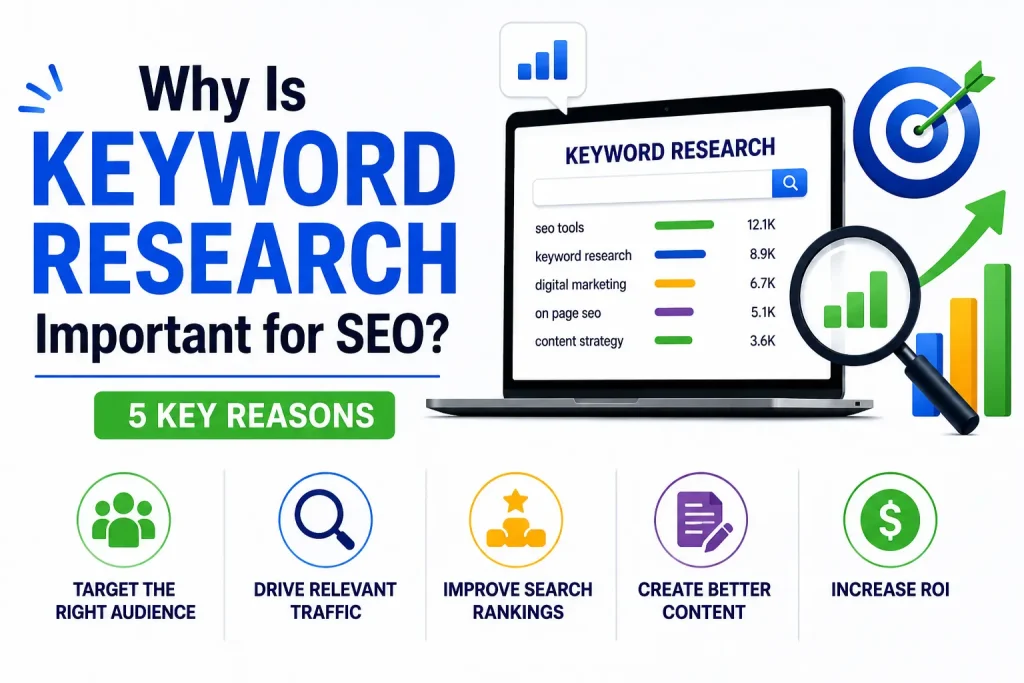
Keyword research is important for SEO because it helps businesses understand what their target audience is actually searching for online. Instead of creating content based on assumptions, businesses can use search terms and user intent to build pages that are more relevant to potential customers. A strong keyword research strategy supports better content planning, improves topical relevance, and helps businesses identify valuable opportunities in search results. This article explains the role of keyword research in SEO, why it matters, and how it supports long-term organic visibility. In This Article What Is the Role of Keyword Research in SEO? Keyword research is the process of identifying the words, phrases, and questions people use when searching on Google and other search engines. The goal is not simply to find popular keywords. Effective SEO keyword research helps businesses understand search intent, competition, relevance, and the topics their audience wants information about. For example, someone searching for β€œbest digital marketing agency” may have a different intent from someone searching for β€œwhat is digital marketing?” Understanding this difference helps businesses create content that better matches the user’s needs. Keyword Research Helps You Understand Search Intent One of the main reasons keyword research matters is that it reveals what users expect from a search. Keywords can indicate whether someone is looking for: When businesses understand this intent, they can create the right type of content. An informational search may require a detailed guide, while a commercial search may require a focused service page. This makes keyword selection more strategic and helps improve the overall user experience. How Keyword Research Improves Your Content Strategy A well-planned keyword research strategy provides direction for website content. It can help identify: Rather than publishing disconnected content, businesses can build a structured content strategy around related topics. This also supports stronger topical relevance, making it easier for search engines and users to understand what a website is about. The Key Benefits of Keyword Research for Businesses The importance of keyword research extends beyond rankings. It helps businesses make better decisions about where to focus their content and SEO efforts. Some important benefits include: Using reliable keyword research tools can also help marketers compare keyword ideas and organize opportunities based on relevance and business goals. However, keyword data should always be combined with human understanding of the audience. Building an Effective Keyword Research Process An effective keyword research process usually starts with understanding the business, its services, customers, and goals. The next steps include identifying relevant topics, researching search terms, analyzing search intent, and selecting keywords that genuinely match the page’s purpose. The best keyword research techniques focus on relevance rather than simply choosing the highest-volume keyword. A keyword should support the user’s needs and the business objective behind the content. Frequently Asked Questions 1. Why is keyword research important for SEO? Keyword research is important for SEO because it helps businesses understand what users search for and create relevant content around those needs. 2. What are keyword research tools used for? Keyword research tools help identify keyword ideas, related search terms, and potential opportunities for content planning and SEO. 3. How does keyword research affect content strategy? It helps businesses choose relevant topics, understand search intent, identify customer questions, and organize content around meaningful subjects. 4. Should businesses target only high-volume keywords? No. High search volume does not always mean a keyword is the best choice. Relevance and search intent are often more important for attracting the right audience. Conclusion Keyword research provides the foundation for a focused and relevant SEO strategy. By understanding what people search for and why they search for it, businesses can create content that better serves their audience and supports stronger long-term search visibility. Build a More Strategic SEO Foundation With Professional Support Effective keyword research requires more than collecting a list of popular search terms. Businesses need to understand search intent, audience relevance, content opportunities, and SEO priorities. TVM Info Solutions provides professional Search Engine Optimization (SEO) support to help businesses build more focused strategies for improving their online visibility and creating relevant digital content. πŸ“ž Call Us: +919004590039πŸ“§ Email: contact@tvminfo.com Our Business Automation Solutions: πŸ’¬ ChatKar – Turn WhatsApp chats into sales: https://chatkar.com/🌟 StarCreator – Build AI automations: https://starcreator.co/πŸ“§ AutoMailSend – Own your email marketing: https://automailsend.com/🎯 AttractLead – Capture & convert leads automatically: https://attractlead.in/
What Is Keyword Research A Complete Guide to Finding the Right Keywords
SEO

What Is Keyword Research? A Complete Guide to Finding the Right Keywords

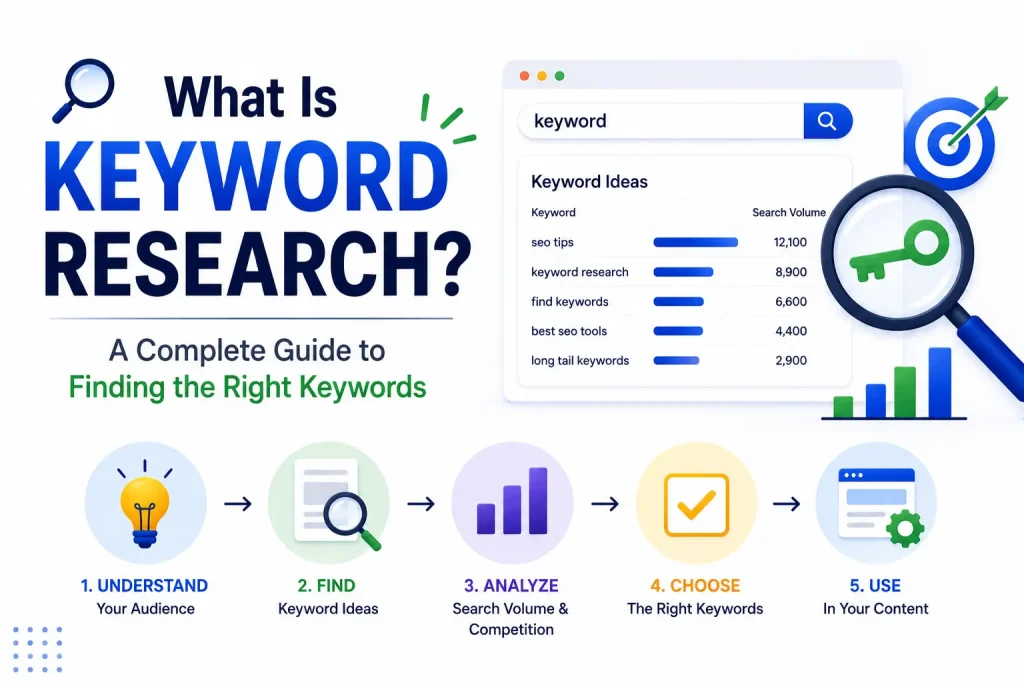
Keyword research is the process of identifying the words and phrases people use when searching for information, products, services, or solutions online. It is a fundamental part of SEO keyword research because it helps businesses understand what their target audience is actually looking for. A strong keyword research strategy goes beyond finding popular search terms. It helps you understand search intent, competition, relevance, and the opportunities that can support your business goals. In This Article What Is Keyword Research? Keyword research involves discovering and analyzing search terms that are relevant to your business and audience. These keywords can include short phrases, detailed questions, product-related searches, and location-specific queries. For example, a business offering digital marketing services may research terms related to SEO services, digital marketing strategies, or specific problems its potential customers want to solve. The goal is not simply to find keywords with high search volume. The goal is to identify relevant keywords that match user intent and can support useful, high-quality content. Why Is Keyword Research Important for SEO? Search engines aim to provide results that best match what users are searching for. Keyword research helps businesses create content around those needs. A well-planned approach can help you: It also helps prevent businesses from creating content based only on assumptions. Instead, decisions can be based on the actual language and topics people use when searching. How Does the Keyword Research Process Work? The keyword research process usually starts with broad topics connected to your business. These topics are then expanded into more specific search terms and questions. A practical process includes: 1. Identify your core topics: Start with the products, services, and problems relevant to your audience. 2. Find related keywords: Explore variations, long-tail keywords, questions, and related search topics. 3. Understand search intent: Determine whether users are looking for information, comparing options, or preparing to make a purchase. 4. Evaluate relevance: Choose keywords that genuinely connect with your business and the content you can provide. 5. Organize keywords into topics: Group related terms together to create focused pages and useful content. Effective Keyword Research Techniques Successful keyword research techniques combine data with a clear understanding of the audience. Useful methods include analyzing search suggestions, related searches, customer questions, competitor topics, and keyword research tools. Long-tail keywords can also be valuable because they often reflect more specific needs. For example, instead of targeting only a broad term, a business may target a detailed phrase that directly addresses a customer problem. The best approach is to focus on relevance and intent, rather than selecting keywords simply because they appear popular. How to Build an Effective Keyword Research Strategy When learning how to build an SEO strategy, keyword research should provide the foundation for content planning and optimization. Start by defining your audience and business objectives. Then build a list of relevant topics, analyze the keywords connected to those topics, and map them to appropriate pages or content. Your keyword research strategy should also be reviewed regularly. Search behavior, competition, products, and customer needs can change over time. Frequently Asked Questions 1. What are keyword research tools? Keyword research tools help identify search terms, related topics, and other information that can support keyword analysis and content planning. 2. Why is keyword research important for SEO? It helps businesses understand what their audience searches for and create content that is more relevant to those needs. 3. What is a keyword research strategy? A keyword research strategy is a structured approach for finding, evaluating, organizing, and using relevant keywords across website content and SEO planning. 4. How often should keyword research be updated? Keyword research should be reviewed periodically, especially when business goals, services, audience behavior, or search trends change. Conclusion Keyword research is the foundation of creating relevant and search-focused content. By understanding what people search for and why they search for it, businesses can develop a more focused SEO and content strategy. The strongest approach combines relevant keywords, search intent, quality content, and ongoing optimization. Build a Stronger Keyword Strategy for Your Business A well-planned keyword strategy can help businesses create more relevant content and build a stronger foundation for Search Engine Optimization (SEO). TVM Info Solutions provides professional SEO support to help businesses plan and optimize their digital presence based on their goals and audience requirements. πŸ“ž Call Us: +919004590039πŸ“§ Email: contact@tvminfo.com Our Business Automation Solutions: πŸ’¬ ChatKar – Turn WhatsApp chats into sales: https://chatkar.com/🌟 StarCreator – Build AI automations: https://starcreator.co/πŸ“§ AutoMailSend – Own your email marketing: https://automailsend.com/🎯 AttractLead – Capture & convert leads automatically: https://attractlead.in/
How Long Does SEO Take to Show Results
SEO

How Long Does SEO Take to Show Results? A Realistic Timeline

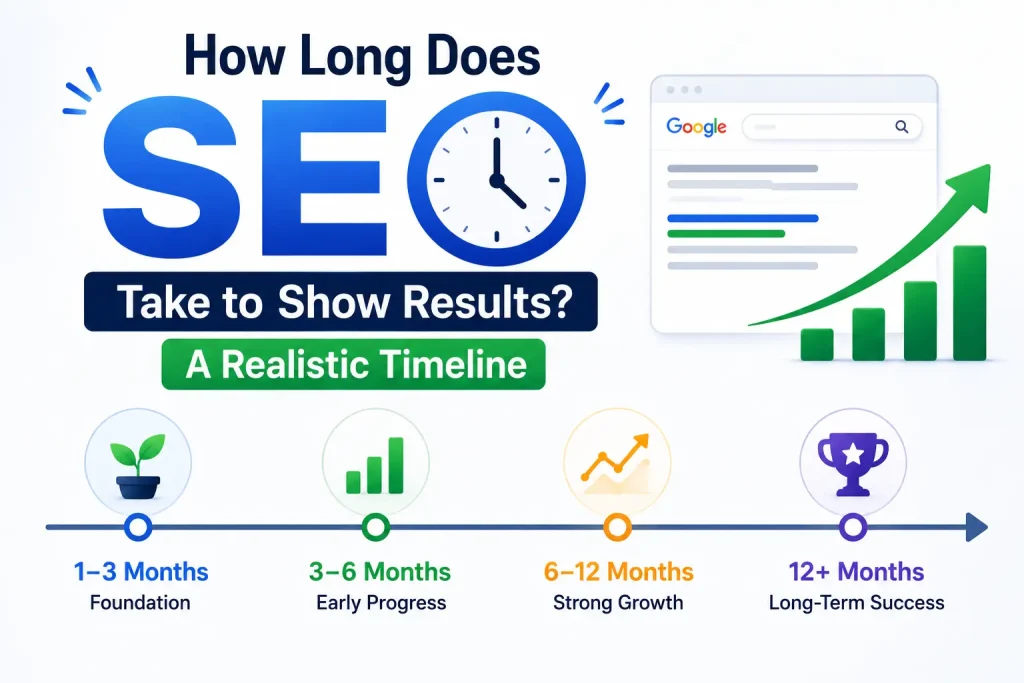
How long does SEO take? This is one of the most common questions businesses ask before investing in Search Engine Optimization. The honest answer is that SEO does not produce instant results. Search visibility usually develops gradually as search engines discover, evaluate, and understand improvements made to a website. The SEO results timeline can vary depending on your website, competition, industry, technical condition, content quality, and the keywords you target. Understanding these factors helps businesses set realistic expectations and build a sustainable search strategy. In This Article Why Does SEO Take Time? SEO involves more than adding keywords to a webpage. Search engines need time to crawl, index, and evaluate new or updated content. A successful SEO approach may include improving website structure, technical performance, content relevance, keyword targeting, internal linking, and user experience. These improvements often work together rather than producing immediate changes individually. That is why the answer to how long does SEO take to work depends on the starting condition of the website and the level of competition in the search results. What Factors Affect the SEO Results Timeline? Several factors can influence when will SEO show results: For example, a website targeting highly competitive search terms may require more time and resources than a business targeting specific, lower-competition topics. How Long Does It Take to Rank on Google? There is no fixed timeline for how long to rank on Google. Some pages may begin gaining visibility relatively quickly, while competitive keywords can require a longer-term strategy. Instead of focusing only on a specific ranking deadline, businesses should monitor meaningful progress. Early indicators can include improved keyword visibility, increased impressions, more indexed pages, growing organic traffic, and stronger engagement. SEO should therefore be viewed as an ongoing process, not a one-time activity. Search results can change as competitors update their websites and search engines refine how they evaluate content. What Happens During the SEO Process? A structured SEO process generally begins with understanding the website’s current position and identifying opportunities for improvement. This may include keyword research, technical analysis, content optimization, on-page SEO improvements, and authority-building activities. Over time, the strategy should be reviewed using performance data and adjusted based on results. A strong approach also focuses on search intent. Creating content that genuinely answers what users are looking for can improve relevance and create a better experience for visitors. How Should Businesses Measure SEO Progress? Rankings are important, but they should not be the only measurement of success. Businesses should also evaluate organic traffic, search impressions, clicks, conversions, and the quality of visitors coming from search. A practical SEO strategy focuses on steady improvement and business relevance rather than chasing quick results. Consistent optimization, useful content, and a technically sound website can create a stronger foundation for long-term search visibility. Frequently Asked Questions 1. How long does SEO take to show results? SEO results vary depending on competition, website condition, content quality, and the strategy being implemented. SEO is generally a gradual process, and progress should be measured consistently over time. 2. Why is SEO taking so long? SEO can take time because search engines need to discover and evaluate website changes. Competition, technical issues, weak content, and inconsistent optimization can also affect progress. 3. Can SEO deliver instant rankings? No legitimate SEO strategy can guarantee instant rankings. Sustainable SEO focuses on improving relevance, website quality, and search visibility over time. 4. How can I improve my SEO results? Focus on useful content, relevant keywords, technical website improvements, strong user experience, and consistent optimization based on performance data. Conclusion Understanding how long does SEO take helps businesses approach search optimization with realistic expectations. SEO progress depends on multiple factors, but a consistent, well-planned strategy can strengthen organic visibility and support long-term digital growth. Build a Sustainable SEO Strategy for Long-Term Growth Businesses that want stronger search visibility need more than quick fixesβ€”they need a strategy based on their website, audience, competition, and business goals. TVM Info Solutions provides professional SEO support to help businesses develop and improve their search presence through a structured approach. πŸ“ž Call Us: +919004590039πŸ“§ Email: contact@tvminfo.com Our Business Automation Solutions: πŸ’¬ ChatKar – Turn WhatsApp chats into sales: https://chatkar.com/🌟 StarCreator – Build AI automations: https://starcreator.co/πŸ“§ AutoMailSend – Own your email marketing: https://automailsend.com/🎯 AttractLead – Capture & convert leads automatically: https://attractlead.in/

What Is an SEO Strategy A Guide to Building a Better Search Plan
SEO

What Is an SEO Strategy? A Guide to Building a Better Search Plan

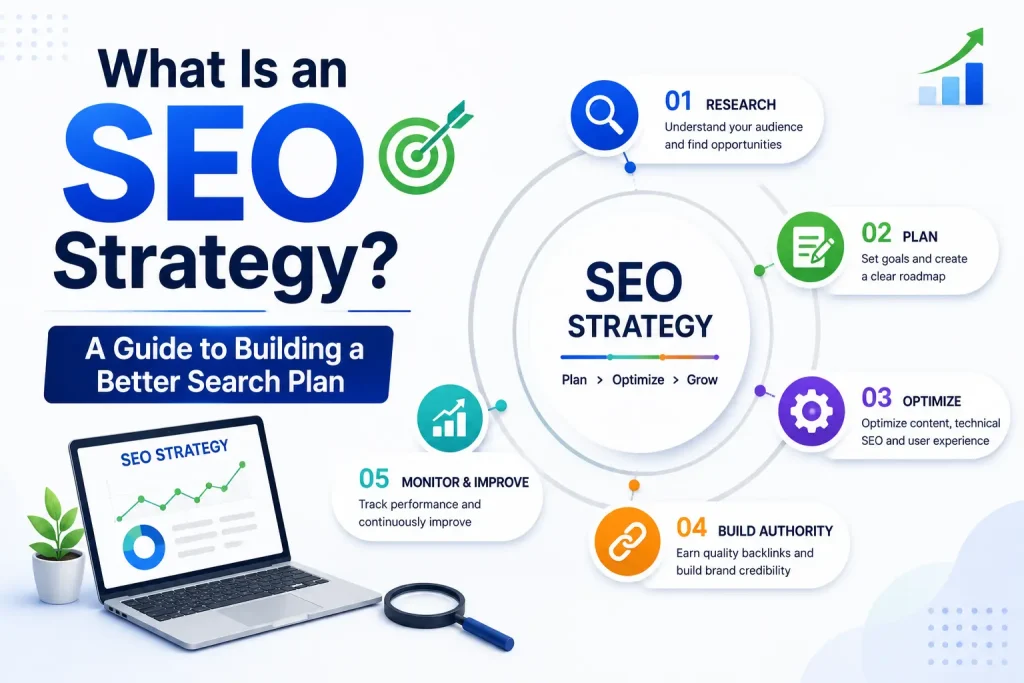
An SEO strategy is a structured plan for improving a website’s visibility in search engines and attracting relevant organic traffic. Instead of making random website changes, a well-planned strategy connects business goals, audience needs, keywords, content, and technical improvements. Understanding how SEO strategy works helps businesses prioritize the actions that can improve their search presence over time. A strong approach focuses on creating useful experiences for users while making it easier for search engines to understand, crawl, and evaluate website content. In This Article What Is an SEO Strategy? An SEO strategy is a planned approach to improving a website’s performance in organic search results. It provides direction for activities such as keyword research, content optimization, technical SEO, website improvements, and authority building. Rather than focusing only on individual keywords, an effective strategy looks at the bigger picture. It considers what users are searching for, what information they need, and how a business website can provide the most relevant and useful answers. A good strategy also evolves as the website, audience, competition, and search environment change. Key Elements of an SEO Strategy Plan A practical SEO strategy plan usually begins with clear objectives. A business should understand whether it wants to increase relevant website traffic, improve visibility for important services, strengthen brand awareness, or support lead generation. The next step involves understanding the target audience and search intent. Keyword research can identify the topics and questions people use when searching for relevant products, services, or information. Other important elements include: These elements work together rather than operating as isolated activities. How to Build an SEO Strategy Learning how to build an SEO strategy starts with understanding your current website position. Review important pages, identify technical issues, evaluate existing content, and determine which topics are most valuable to your audience. Next, create priorities based on business relevance and search demand. Develop useful content around important topics, optimize existing pages, and ensure the website provides a clear user experience. An effective strategy should also define how progress will be monitored. Search visibility, organic traffic, user engagement, and relevant conversions can help businesses understand whether their efforts are supporting their objectives. How an SEO Strategy Framework Works An SEO strategy framework provides a repeatable structure for planning and improving search performance. A simple framework can follow this process: Research β†’ Plan β†’ Optimize β†’ Publish β†’ Measure β†’ Improve Research identifies opportunities and audience needs. Planning determines priorities. Optimization improves content and website elements. Measurement helps identify what needs further attention. Modern search experiences also make content clarity and topical relevance increasingly valuable. Well-structured, answer-focused information can help users understand a topic quickly while giving search systems clearer context about a page. Why a Long-Term SEO Strategy Matters Search engine optimization  is not simply about making one-time changes and expecting permanent results. Websites need ongoing attention as content becomes outdated, competitors improve, and search behavior changes. A long-term SEO strategy helps businesses make more informed decisions instead of chasing short-term tactics. It creates a stronger foundation for consistent content improvement, technical maintenance, and sustainable search visibility. Frequently Asked Questions 1. What is an SEO strategy in simple words? An SEO strategy is a planned approach to improving a website so it can become more visible and useful in relevant search results. 2. How do you build an SEO strategy? Start by understanding your business goals, target audience, keywords, search intent, existing website performance, and the improvements needed across content and technical SEO. 3. What should an SEO strategy plan include? A strong SEO strategy plan can include keyword research, content planning, on-page optimization, technical improvements, internal linking, and ongoing performance monitoring. 4. How long does an SEO strategy take to work? SEO results can vary depending on factors such as competition, website condition, content quality, and the work required. SEO should generally be approached as an ongoing process rather than a guaranteed short-term result. Conclusion A successful SEO strategy provides a clear direction for improving search visibility. By connecting audience needs, valuable content, website quality, and ongoing optimization, businesses can build a stronger foundation for long-term organic growth. Build a Clearer Search Strategy for Your Business If your business needs a structured approach to improving search visibility and organic growth, TVM Info Solutions provides professional SEO support focused on relevant strategy, website optimization, and long-term digital improvement. Our team can help you assess your requirements and develop an approach aligned with your business goals. TVM Info offers Search Engine Optimization (SEO) as part of its digital marketing services. πŸ“ž Call Us: +919004590039πŸ“§ Email: contact@tvminfo.com Our Business Automation Solutions: πŸ’¬ ChatKar – Turn WhatsApp chats into sales: https://chatkar.com/🌟 StarCreator – Build AI automations: https://starcreator.co/πŸ“§ AutoMailSend – Own your email marketing: https://automailsend.com/🎯 AttractLead – Capture & convert leads automatically: https://attractlead.in/

Scroll to Top