
Search Visibility

What Is an SEO Strategy A Guide to Building a Better Search Plan
SEO

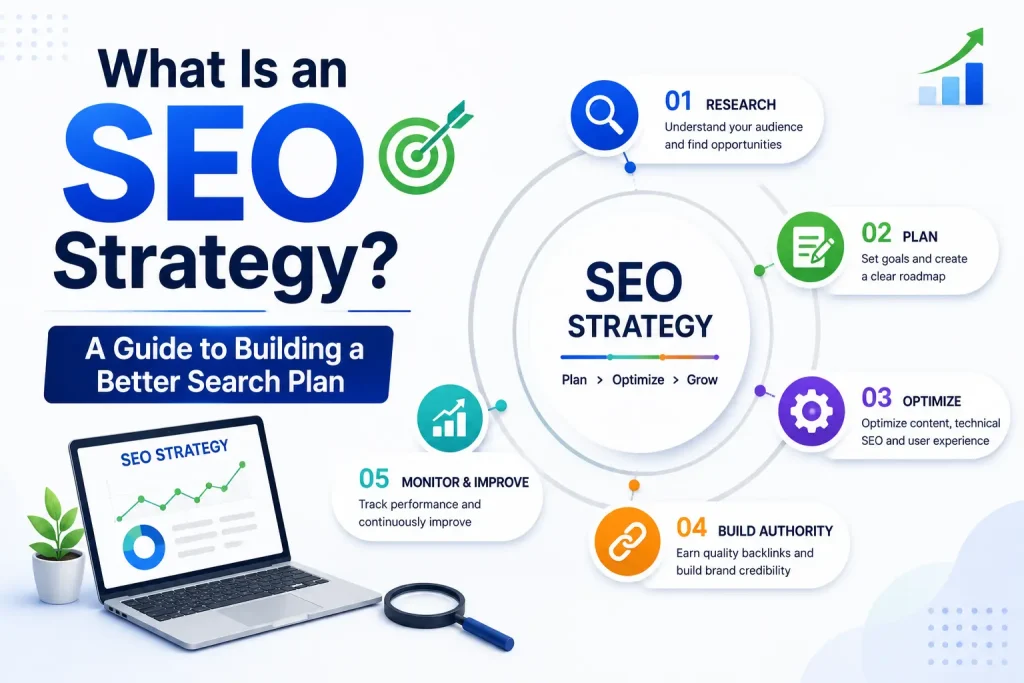
What Is an SEO Strategy? A Guide to Building a Better Search Plan

An SEO strategy is a structured plan for improving a website’s visibility in search engines and attracting relevant organic traffic. Instead of making random website changes, a well-planned strategy connects business goals, audience needs, keywords, content, and technical improvements. Understanding how SEO strategy works helps businesses prioritize the actions that can improve their search presence over time. A strong approach focuses on creating useful experiences for users while making it easier for search engines to understand, crawl, and evaluate website content. In This Article What Is an SEO Strategy? An SEO strategy is a planned approach to improving a website’s performance in organic search results. It provides direction for activities such as keyword research, content optimization, technical SEO, website improvements, and authority building. Rather than focusing only on individual keywords, an effective strategy looks at the bigger picture. It considers what users are searching for, what information they need, and how a business website can provide the most relevant and useful answers. A good strategy also evolves as the website, audience, competition, and search environment change. Key Elements of an SEO Strategy Plan A practical SEO strategy plan usually begins with clear objectives. A business should understand whether it wants to increase relevant website traffic, improve visibility for important services, strengthen brand awareness, or support lead generation. The next step involves understanding the target audience and search intent. Keyword research can identify the topics and questions people use when searching for relevant products, services, or information. Other important elements include: These elements work together rather than operating as isolated activities. How to Build an SEO Strategy Learning how to build an SEO strategy starts with understanding your current website position. Review important pages, identify technical issues, evaluate existing content, and determine which topics are most valuable to your audience. Next, create priorities based on business relevance and search demand. Develop useful content around important topics, optimize existing pages, and ensure the website provides a clear user experience. An effective strategy should also define how progress will be monitored. Search visibility, organic traffic, user engagement, and relevant conversions can help businesses understand whether their efforts are supporting their objectives. How an SEO Strategy Framework Works An SEO strategy framework provides a repeatable structure for planning and improving search performance. A simple framework can follow this process: Research → Plan → Optimize → Publish → Measure → Improve Research identifies opportunities and audience needs. Planning determines priorities. Optimization improves content and website elements. Measurement helps identify what needs further attention. Modern search experiences also make content clarity and topical relevance increasingly valuable. Well-structured, answer-focused information can help users understand a topic quickly while giving search systems clearer context about a page. Why a Long-Term SEO Strategy Matters Search engine optimization  is not simply about making one-time changes and expecting permanent results. Websites need ongoing attention as content becomes outdated, competitors improve, and search behavior changes. A long-term SEO strategy helps businesses make more informed decisions instead of chasing short-term tactics. It creates a stronger foundation for consistent content improvement, technical maintenance, and sustainable search visibility. Frequently Asked Questions 1. What is an SEO strategy in simple words? An SEO strategy is a planned approach to improving a website so it can become more visible and useful in relevant search results. 2. How do you build an SEO strategy? Start by understanding your business goals, target audience, keywords, search intent, existing website performance, and the improvements needed across content and technical SEO. 3. What should an SEO strategy plan include? A strong SEO strategy plan can include keyword research, content planning, on-page optimization, technical improvements, internal linking, and ongoing performance monitoring. 4. How long does an SEO strategy take to work? SEO results can vary depending on factors such as competition, website condition, content quality, and the work required. SEO should generally be approached as an ongoing process rather than a guaranteed short-term result. Conclusion A successful SEO strategy provides a clear direction for improving search visibility. By connecting audience needs, valuable content, website quality, and ongoing optimization, businesses can build a stronger foundation for long-term organic growth. Build a Clearer Search Strategy for Your Business If your business needs a structured approach to improving search visibility and organic growth, TVM Info Solutions provides professional SEO support focused on relevant strategy, website optimization, and long-term digital improvement. Our team can help you assess your requirements and develop an approach aligned with your business goals. TVM Info offers Search Engine Optimization (SEO) as part of its digital marketing services. 📞 Call Us: +919004590039📧 Email: contact@tvminfo.com Our Business Automation Solutions: 💬 ChatKar – Turn WhatsApp chats into sales: https://chatkar.com/🌟 StarCreator – Build AI automations: https://starcreator.co/📧 AutoMailSend – Own your email marketing: https://automailsend.com/🎯 AttractLead – Capture & convert leads automatically: https://attractlead.in/
What Is Organic Traffic and How Does It Work
SEO

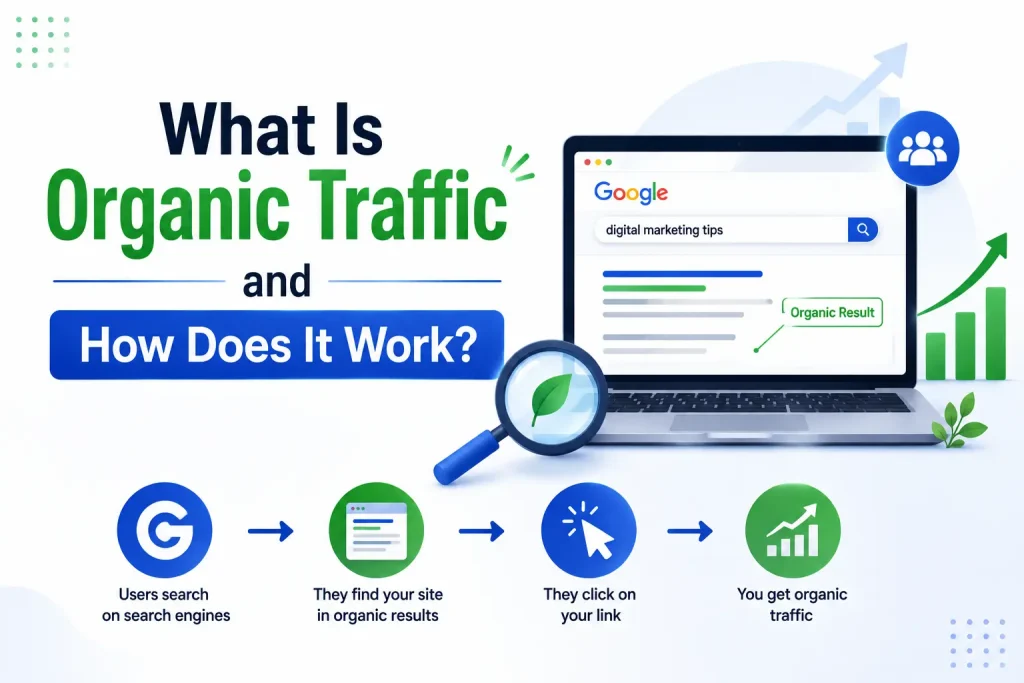
What Is Organic Traffic and How Does It Work?

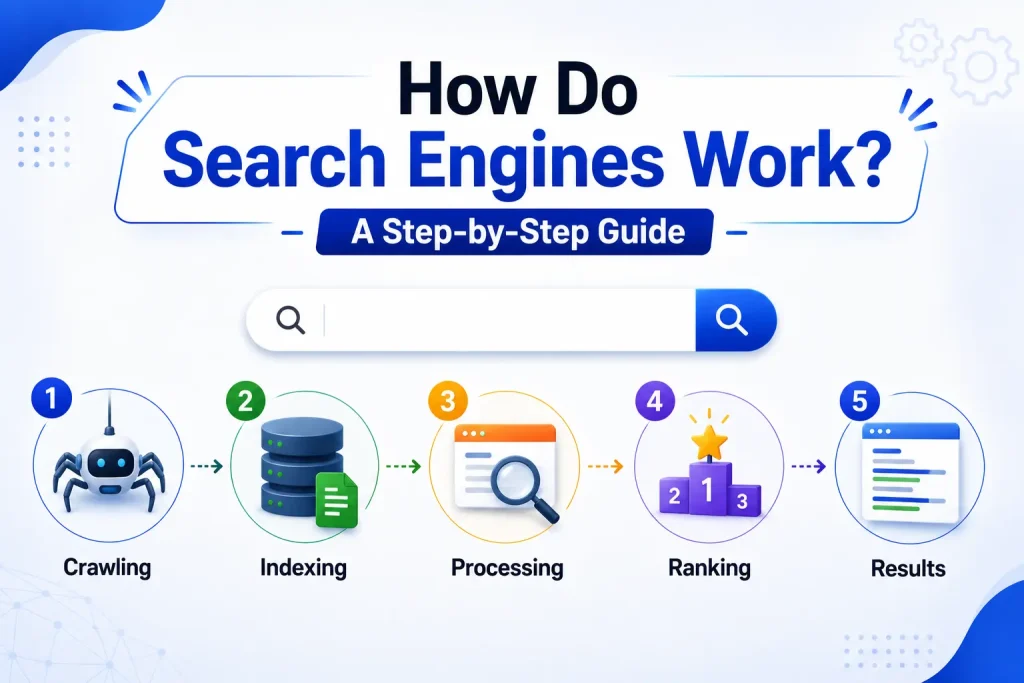
Organic Traffic refers to visitors who reach a website through unpaid search engine results. When someone searches for information, products, or services on Google or another search engine and clicks a non-paid result, that visit is generally counted as organic search traffic. For businesses, understanding what is organic traffic is important because it helps explain how people discover a website naturally through search. This article explains how organic traffic works, why it matters, and what businesses can do to build a stronger long-term search presence. In This Article What Is Organic Traffic? Organic traffic is website traffic generated through unpaid listings on search engine results pages. Unlike paid advertisements, businesses do not pay directly for every visitor who clicks an organic result. For example, if a user searches for “digital marketing services“, finds a relevant website in the search results, and clicks it without interacting with an advertisement, that visit can be considered organic website traffic. Organic traffic can come from different search engines, although Google is the primary search platform for many businesses and users. How Does Organic Traffic Work? To understand how organic traffic works, it helps to understand the basic search process. Search engines discover website pages, process and organize information, and attempt to show relevant results for a user’s search query. When a website has useful content that matches what people are searching for, it may become eligible to appear in relevant search results. A typical process looks like this: Website content → Search engine discovery → Indexing → Search result visibility → Website visit The quality and relevance of the page, its technical accessibility, content structure, and overall usefulness can influence its visibility. Search Engine Optimization (SEO) focuses on improving these areas to help search engines better understand a website and connect it with relevant searches. Why Is Organic Search Traffic Important? A strong flow of organic search traffic can support long-term digital visibility. It helps businesses reach users who are actively searching for answers, information, products, or services related to their needs. Some important benefits include: However, traffic volume alone is not the main goal. Relevant traffic from the right audience is generally more valuable than large numbers of unrelated visitors. What Factors Influence Organic Website Traffic? Several SEO techniques can influence how easily search engines understand and evaluate website pages. Important factors include high-quality content, relevant keyword targeting, clear website structure, mobile usability, page performance, internal linking, and technical accessibility. Content should answer genuine user questions rather than simply repeat keywords. A technically sound website also makes it easier for search engines to discover and process important pages. Businesses should focus on creating useful pages that match search intent and provide a clear, positive user experience. How Can Businesses Improve Organic Traffic? Improving organic traffic usually requires a consistent and structured SEO strategy rather than a single change. Businesses can begin by understanding what their target audience searches for, creating useful content around relevant topics, improving important website pages, and resolving technical issues that may affect search visibility. Regular performance monitoring is also valuable because it helps businesses understand which pages attract visitors and where improvements may be needed. A professional SEO strategy should connect content, technical optimization, and user experience with genuine business objectives. Frequently Asked Questions 1. What is the difference between organic traffic and paid traffic? Organic traffic comes from unpaid search results, while paid traffic comes from advertisements where businesses pay for visibility or clicks. 2. Is organic traffic the same as direct traffic? No. Organic traffic comes through search engine results, while direct traffic generally refers to visits where a user enters a website address directly or the source cannot be clearly identified. 3. How long does it take to improve organic traffic? There is no fixed timeline. Results can depend on factors such as website condition, competition, content quality, technical issues, and the effectiveness of the overall SEO strategy. 4. Can small businesses benefit from organic search traffic? Yes. Small businesses can benefit by creating useful, relevant content and improving their website for the searches most closely connected to their products, services, and audience. Conclusion Organic traffic represents visitors who discover a website through unpaid search results. Building sustainable organic search traffic requires useful content, technical accessibility, relevant optimization, and a clear understanding of what users are searching for. Rather than focusing only on traffic numbers, businesses should aim to attract the right audience and create website experiences that support meaningful engagement. Build a Stronger Organic Search Strategy for Your Business A well-planned SEO approach can help businesses improve how their website is understood by search engines and discovered by relevant audiences. TVM Info Solutions provides professional Search Engine Optimization support for businesses looking to strengthen their search visibility and organic growth strategy. 📞 Call Us: +919004590039📧 Email: contact@tvminfo.com Our Business Automation Solutions: 💬 ChatKar – Turn WhatsApp chats into sales: https://chatkar.com/🌟 StarCreator – Build AI automations: https://starcreator.co/📧 AutoMailSend – Own your email marketing: https://automailsend.com/🎯 AttractLead – Capture & convert leads automatically: https://attractlead.in/
How Do Search Engines Work
SEO

How Do Search Engines Work? A Step-by-Step Guide

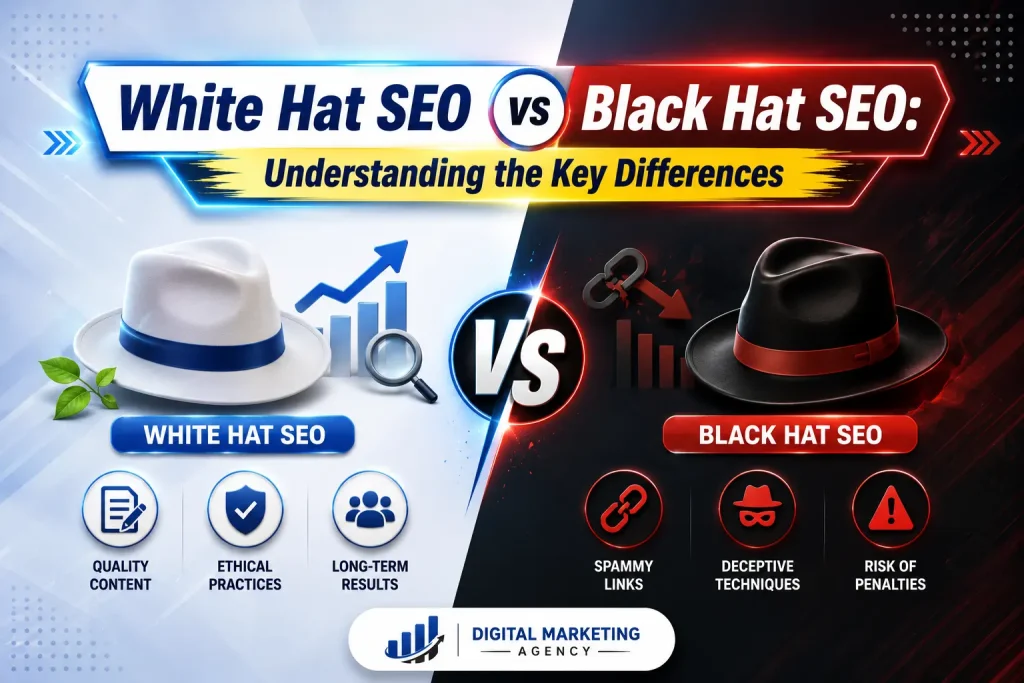
When people search for information online, search engines help them discover the most relevant pages from billions of websites. Understanding how search engines work is useful for business owners, marketers, and website managers because it explains why website structure, content, and optimization matter. The basic search engine process involves discovering websites, understanding their content, storing information, and selecting relevant results for user searches. This guide explains how search engines work step by step and what businesses should know about improving their website’s search visibility. In This Article 1. How Do Search Engines Find Websites? Search engines discover pages through automated programs commonly called crawlers or bots. These programs move across the web by following links between pages and identifying new or updated content. Understanding how search engines find websites helps businesses recognize the importance of a clear website structure. Internal links can help search engines discover important pages, while properly organized navigation makes website content easier to understand. Website owners can also provide information about their pages through tools such as XML sitemaps, which can support the discovery process. 2. How Search Engines Crawl Websites Search engine crawling is the process through which automated bots visit web pages and examine their content. Crawlers may analyze elements such as page content, links, images, and technical information. However, not every page is necessarily crawled immediately. Factors such as website accessibility, technical errors, internal linking, and crawl instructions can affect how efficiently search engines access a website. A technically well-structured website makes it easier for search engines to understand which pages are available and important. 3. How Search Engines Index Websites After crawling a page, a search engine may process and store information about that page in its index. Search engine indexing allows the search engine to retrieve potentially relevant pages when users perform searches. When considering how search engines index websites, content quality and clarity matter. Search engines need to understand what a page is about and how it relates to a user’s search query. Clear headings, relevant content, descriptive page information, and logical website organization can help communicate the purpose of a page more effectively. 4. How Search Engines Rank Results When someone enters a search query, the search engine evaluates potentially relevant indexed pages and determines which results may best answer that query. Ranking can involve many signals and systems. Relevance, content quality, website usability, page experience, and the overall usefulness of information can all play a role. This is why effective SEO is not simply about adding keywords to a page. A strong SEO approach focuses on helping search engines understand content while also creating a useful experience for real users. 5. Why the Search Engine Process Matters for Businesses Understanding how search engines work helps businesses make better decisions about their websites and digital content. If important pages cannot be discovered, crawled, or properly understood, their visibility in search results may be limited. Businesses should focus on creating useful content, maintaining a technically accessible website, organizing pages logically, and developing a clear SEO strategy based on their audience and business goals. For companies that need professional support, TVM Info Solutions provides Search Engine Optimization (SEO) services to help businesses improve their website visibility through relevant optimization strategies. Frequently Asked Questions 1. How do search engines work step by step? Search engines generally discover websites, crawl their pages, process and index information, and then evaluate relevant pages when users perform a search. 2. What is search engine crawling? Search engine crawling is the process where automated bots visit web pages to discover and examine website content and links. 3. What is search engine indexing? Search engine indexing is the process of processing and storing information about eligible web pages so they can potentially appear for relevant search queries. 4. Can SEO help search engines understand a website? Yes. Proper SEO techniques can improve website structure, content clarity, internal linking, and technical accessibility, helping search engines better understand important pages. Conclusion Understanding how search engines work provides a strong foundation for building an effective online presence. From crawling and indexing to evaluating relevant search results, every stage of the process highlights the importance of useful content and a well-structured website. Businesses that understand these fundamentals can make more informed decisions about their SEO strategy and long-term search visibility. Build a Stronger Foundation for Search Visibility A successful website needs more than good-looking pages. Businesses must consider how search engines discover, understand, and evaluate their content. TVM Info Solutions provides professional SEO support for businesses looking to strengthen their search presence with a structured and relevant strategy. 📞 Call Us: +919004590039📧 Email: contact@tvminfo.com Our Business Automation Solutions: 💬 ChatKar – Turn WhatsApp chats into sales: https://chatkar.com/🌟 StarCreator – Build AI automations: https://starcreator.co/📧 AutoMailSend – Own your email marketing: https://automailsend.com/🎯 AttractLead – Capture & convert leads automatically: https://attractlead.in/
White Hat SEO vs Black Hat SEO
SEO

White Hat SEO vs Black Hat SEO: Understanding the Key Differences

Understanding the difference between White Hat SEO vs Black Hat SEO is important for any business investing in long-term search visibility. While both approaches aim to improve a website’s position in search results, the methods they use are very different. White hat SEO focuses on improving a website according to search engine guidelines and user needs. Black hat SEO, on the other hand, relies on manipulative techniques designed to influence rankings quickly. Knowing the difference can help businesses make better decisions about their SEO strategy and protect their websites from unnecessary risks. In This Article What Is White Hat SEO? White hat SEO refers to ethical optimization practices that focus on improving a website’s quality, relevance, usability, and visibility while following search engine guidelines. Common white hat SEO techniques include creating helpful content, improving website structure, optimizing relevant keywords naturally, enhancing page experience, and earning genuine backlinks. The goal is not simply to influence search engines. A strong white hat strategy also focuses on providing useful information and a better experience for visitors. This approach may require time and consistent effort, but it supports sustainable search engine rankings. What Is Black Hat SEO? Black hat SEO refers to techniques intended to manipulate search engine algorithms rather than genuinely improve a website for users. Common black hat SEO techniques may include keyword stuffing, hidden text, cloaking, manipulative link schemes, and automatically generated low-quality content designed primarily to influence rankings. These methods may sometimes create short-term changes in visibility, but they carry significant risks. Search engines can identify practices that violate their guidelines, which may lead to reduced visibility or other actions affecting a website’s presence in search results. White Hat SEO vs Black Hat SEO: The Main Difference The primary difference between white hat and black hat SEO is the approach. White hat SEO focuses on users, quality, relevance, and sustainable optimization. Black hat SEO focuses on exploiting weaknesses or attempting to manipulate ranking systems. For example, a white hat approach to content involves researching what users want and creating useful pages that answer those needs. A black hat approach may involve repeating keywords excessively or publishing low-value pages solely to target search queries. For businesses, ethical SEO practices are generally the stronger foundation for building long-term organic visibility and credibility. Why White Hat SEO Is Better for Long-Term Growth Search engines aim to provide users with relevant and useful results. Therefore, websites that improve their content, technical structure, and user experience are better positioned to build sustainable visibility. A professional Search Engine Optimization (SEO) strategy can help businesses identify relevant search opportunities, improve important pages, and create content that addresses genuine audience needs. Rather than chasing shortcuts, businesses should focus on quality content, technical improvements, and a clear understanding of search intent. These practices can also support visibility across evolving search experiences where useful, trustworthy, and well-structured information matters. Choosing the Right SEO Approach for Your Website The right SEO approach should support both business goals and user needs. Before implementing any optimization technique, consider whether it genuinely improves the website or exists only to manipulate rankings. A sustainable strategy requires regular evaluation, quality improvements, and an understanding of how people search for information. Avoiding risky shortcuts can help businesses build a stronger and more reliable digital presence over time. Frequently Asked Questions 1. What is the difference between white hat and black hat SEO? White hat SEO follows ethical practices and focuses on users, while black hat SEO uses manipulative techniques intended to influence search engine rankings. 2. Is white hat SEO better than black hat SEO? For sustainable website growth, white hat SEO is generally the better approach because it focuses on quality, relevance, and practices aligned with search engine guidelines. 3. What are examples of white hat SEO techniques? Examples include creating useful content, improving website structure, optimizing pages naturally, improving user experience, and earning relevant backlinks. 4. Can black hat SEO affect a website negatively? Yes. Techniques that violate search engine guidelines can create risks for a website’s visibility and long-term search performance. Conclusion The debate around White Hat SEO vs Black Hat SEO comes down to sustainable growth versus risky shortcuts. Businesses that focus on helpful content, strong website quality, and genuine user value are building a more reliable foundation for long-term search visibility. Build a Sustainable Search Strategy for Your Business If your business wants to improve its search visibility through ethical and strategic optimization, TVM Info Solutions provides professional SEO support focused on relevant content, website improvements, and long-term digital growth. Discuss your business requirements with our team to develop the right approach for your website. 📞 Call Us: +919004590039📧 Email: contact@tvminfo.com Our Business Automation Solutions: 💬 ChatKar – Turn WhatsApp chats into sales: https://chatkar.com/🌟 StarCreator – Build AI automations: https://starcreator.co/📧 AutoMailSend – Own your email marketing: https://automailsend.com/🎯 AttractLead – Capture & convert leads automatically: https://attractlead.in/
What Is Search Engine Ranking
SEO

What Is Search Engine Ranking and How Does It Work?

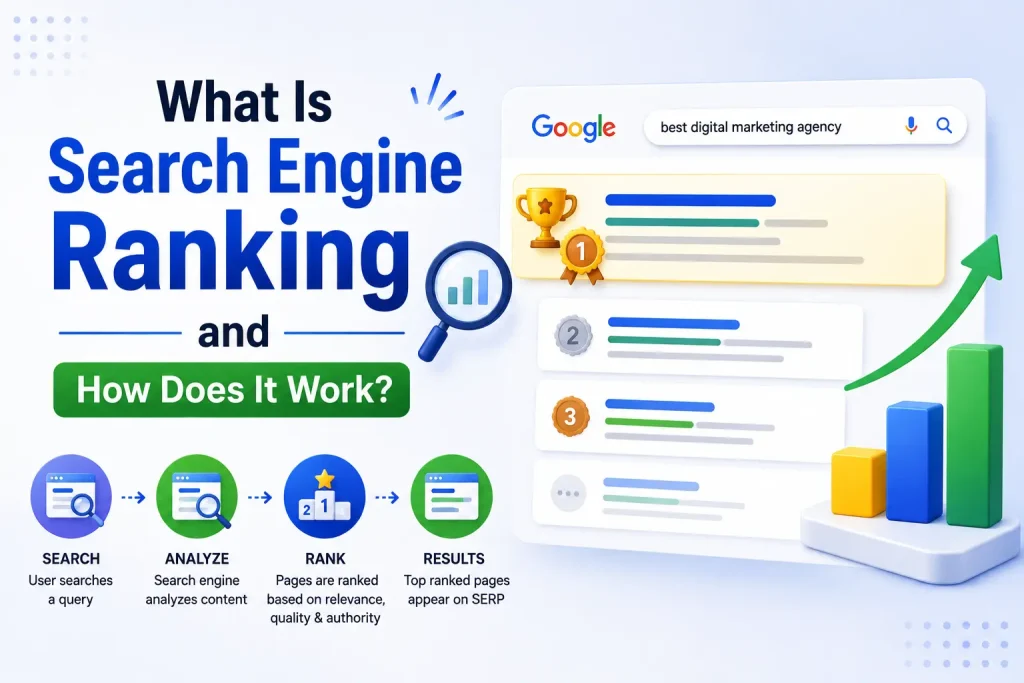
Search Engine Ranking refers to the position a webpage appears in search results when someone searches for a relevant query. For businesses, visibility in search results can influence how easily potential customers discover their website, products, or services. Understanding what is search engine ranking, how rankings are determined, and which factors influence them can help businesses make better decisions about their website and SEO strategy. In This Article What Is Search Engine Ranking? A search engine ranking is the position of a webpage within search results for a particular keyword or search query. For example, if your website appears as the third unpaid result when someone searches for a service, your page has a higher position than websites appearing further down the results. Google search ranking is not a fixed score assigned permanently to a website. Rankings can vary depending on factors such as the search query, content relevance, location, device, competition, and changes to search systems. Different pages on the same website can also achieve different search engine rankings depending on how well each page answers a user’s search intent. How Search Engine Ranking Works To understand how search engine ranking works, it helps to look at the overall search process. First, search engines discover and crawl webpages. They then process and store information about those pages in their index. When a user enters a search query, the search engine evaluates potentially relevant pages and determines which results are most useful for that particular search. The ranking process considers many signals rather than relying on one factor alone. The goal is to present results that are relevant, useful, accessible, and appropriate for the user’s query. This is why simply adding keywords repeatedly to a webpage does not guarantee better visibility. Important Search Engine Ranking Factors Several search engine ranking factors can influence how effectively a page competes in search results. Important areas include: These factors work together. A technically sound website with weak content may struggle, while excellent content may also face limitations if search engines cannot properly access or understand the page. Why Search Engine Rankings Matter for Businesses Better search engine rankings can increase the opportunities for relevant users to discover a business through unpaid search results. This can support organic visibility, website visits, brand awareness, and long-term digital growth. However, ranking should not be treated as the only goal. The right audience matters more than attracting irrelevant traffic. A page should match the user’s intent and provide information that helps them take the next appropriate step. For businesses, Search Engine Optimization (SEO) focuses on improving the overall quality, relevance, technical foundation, and visibility of a website. How to Improve Search Visibility Improving Search Engine Ranking requires a consistent and well-planned approach. Businesses should focus on understanding what their audience searches for, creating genuinely useful content, improving website structure, and resolving technical issues that may affect crawling or indexing. Regularly reviewing website performance can also help identify opportunities for improvement. Search visibility can change as competitors, user behavior, and search systems evolve. A sustainable strategy focuses on building useful pages for people first while making those pages understandable and accessible to search engines. Frequently Asked Questions 1. What is search engine ranking? Search engine ranking is the position a webpage holds in search results for a specific query or keyword. 2. What factors affect Google search ranking? Google search ranking can be influenced by relevance, content quality, technical accessibility, user-focused page experience, and other signals used to evaluate search results. 3. How long does it take to improve search engine rankings? There is no fixed timeline. Results can vary based on website condition, competition, content quality, technical issues, and the level of SEO work required. 4. Can a business improve rankings without SEO? Some pages may gain visibility naturally, but a structured SEO strategy can help businesses improve website quality, search accessibility, and content relevance more systematically. Conclusion Search Engine Ranking determines where webpages appear for relevant searches, making it an important part of online visibility. By understanding how search engine ranking works and focusing on useful content, technical quality, and search intent, businesses can build a stronger foundation for sustainable search visibility. Build a Stronger Search Visibility Strategy for Your Business If your business needs a clearer approach to improving search visibility, content relevance, and website performance, TVM Info Solutions provides professional Search Engine Optimization (SEO) support tailored to business requirements. A well-planned strategy can help strengthen your website’s foundation and improve its ability to compete in relevant search results. 📞 Call Us: +919004590039📧 Email: contact@tvminfo.com Our Business Automation Solutions: 💬 ChatKar – Turn WhatsApp chats into sales: https://chatkar.com/🌟 StarCreator – Build AI automations: https://starcreator.co/📧 AutoMailSend – Own your email marketing: https://automailsend.com/🎯 AttractLead – Capture & convert leads automatically: https://attractlead.in/
Core Types of SEO and Their Role in Search Strategy
SEO

Core Types of SEO and Their Role in Search Strategy

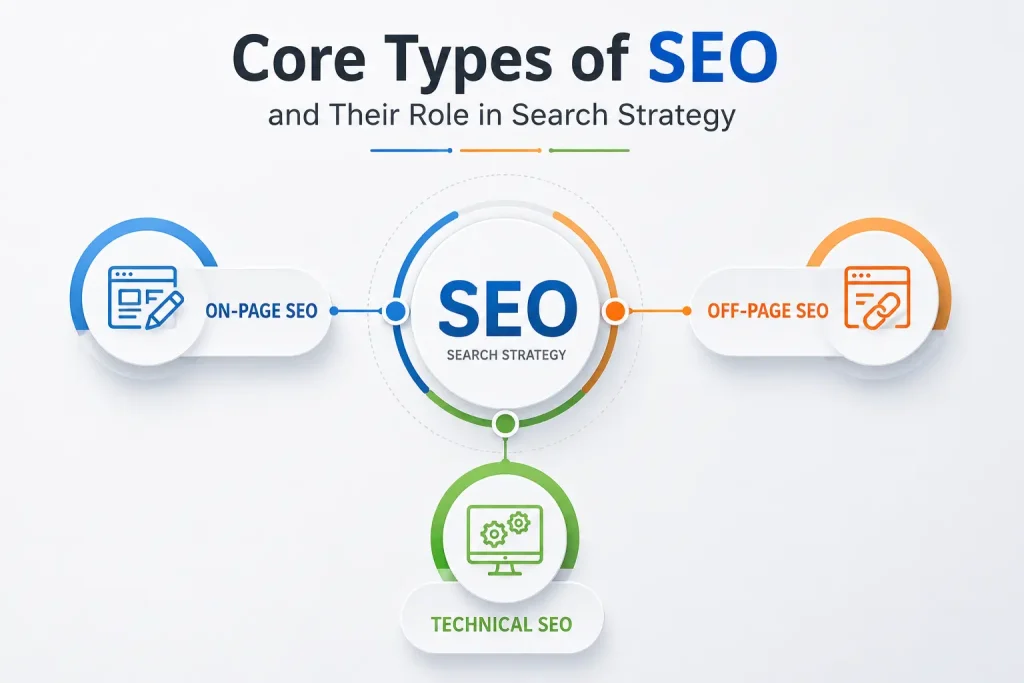
Understanding the different Types of SEO is essential for building an effective search strategy. SEO is not a single activity; it involves multiple areas that work together to improve a website’s visibility, relevance, accessibility, and overall performance in search results. The three core SEO types are On-Page SEO, Off-Page SEO, and Technical SEO. Each has a different role, but all three contribute to a stronger and more complete optimization strategy. This article explains how these search engine optimization techniques work and why businesses should consider them together. In This Article Understanding the Core Types of SEO The main Types of SEO can be divided into three important categories: On-Page SEO, Off-Page SEO, and Technical SEO. On-Page SEO focuses on the content and elements within your website. Off-Page SEO focuses on signals and authority developed outside your website. Technical SEO focuses on the technical foundation that helps search engines access, understand, and process your pages. A successful search strategy usually requires attention to all three areas rather than focusing on only one. On-Page SEO: Improving Content and Relevance On-Page SEO involves optimizing the content and visible elements of individual web pages. Its purpose is to help users and search engines understand what a page is about. Important On-Page SEO techniques include creating useful content, using relevant keywords naturally, writing clear headings, optimizing title tags, and improving internal linking. For example, if a business creates a service page, the page should clearly explain the service, answer relevant user questions, and provide useful information. Effective On-Page SEO focuses on search intent and content relevance, not simply repeating keywords. Off-Page SEO: Building Authority Beyond Your Website Off-Page SEO refers to activities and signals that can strengthen a website’s authority beyond its own pages. One commonly discussed aspect is earning relevant, high-quality backlinks from trustworthy websites. Other factors can include brand mentions, online reputation, and broader digital visibility. The goal is not to collect as many links as possible. A strong Off-Page SEO approach focuses on relevance, quality, and credibility. Businesses should avoid manipulative search engine optimization techniques that attempt to artificially influence search results. Technical SEO: Building a Strong Website Foundation Technical SEO focuses on the infrastructure that supports search engine crawling and indexing. Even high-quality content may face difficulties if a website has significant technical problems. Important areas can include website speed, mobile usability, crawlability, site structure, secure connections, and structured data where appropriate. Technical SEO also works closely with website development. A well-built website can provide a better foundation for both search engines and users, making it easier to access important pages and navigate information. How the Different SEO Types Work Together The most effective SEO strategy combines these core areas. On-Page SEO improves relevance and content quality. Off-Page SEO can support authority and credibility. Technical SEO provides the foundation that helps search engines access and understand the website. For example, publishing excellent content alone may not be enough if important pages cannot be properly crawled. Similarly, technical improvements cannot replace useful content that genuinely answers user needs. A balanced approach helps businesses create a stronger search presence by focusing on content, authority, and technical performance together. Frequently Asked Questions 1. What are the three main Types of SEO? The three core Types of SEO are On-Page SEO, Off-Page SEO, and Technical SEO. Each focuses on a different part of improving a website’s search performance. 2. Which type of SEO is most important? There is no single SEO type that is always the most important. A successful strategy depends on the website’s current condition, business goals, competition, and audience needs. 3. What is the difference between On-Page and Technical SEO? On-Page SEO focuses mainly on content and page-level optimization, while Technical SEO focuses on the website’s infrastructure, accessibility, crawling, and technical performance. 4. Can a business focus on only one type of SEO? A business can begin by addressing its most urgent issues, but long-term search optimization generally benefits from combining multiple search engine optimization techniques into one coordinated strategy. Conclusion The core Types of SEO: On-Page SEO, Off-Page SEO, and Technical SEO each play an important role in search strategy. Understanding how they work together helps businesses make better decisions about content, website improvements, and long-term search visibility. A successful approach should focus on creating useful content, a technically sound website, and genuine digital credibility. Build a More Complete SEO Strategy for Your Business A strong search strategy requires more than isolated SEO activities. Businesses need to understand which areas require attention and how different SEO techniques can work together. TVM Info Solutions provides professional SEO support to help businesses improve search visibility through a strategic and business-focused approach. Discuss your requirements to identify the right direction for your website and search goals. 📞 Call Us: +919004590039📧 Email: contact@tvminfo.com Our Business Automation Solutions: 💬 ChatKar – Turn WhatsApp chats into sales: https://chatkar.com/🌟 StarCreator – Build AI automations: https://starcreator.co/📧 AutoMailSend – Own your email marketing: https://automailsend.com/🎯 AttractLead – Capture & convert leads automatically: https://attractlead.in/ Connect with us:📸 Instagram: https://www.instagram.com/tvm_infosolution/📘Facebook: https://www.facebook.com/people/Tvm-Info-Solutions-Pvt-Ltd/61555896761755/🔗 LinkedIn: https://in.linkedin.com/company/tvminfo▶️ YouTube: https://www.youtube.com/@tvminfosolutions
How SEO Work Helps Improve Search Rankings
SEO

How SEO Work Helps Improve Search Rankings

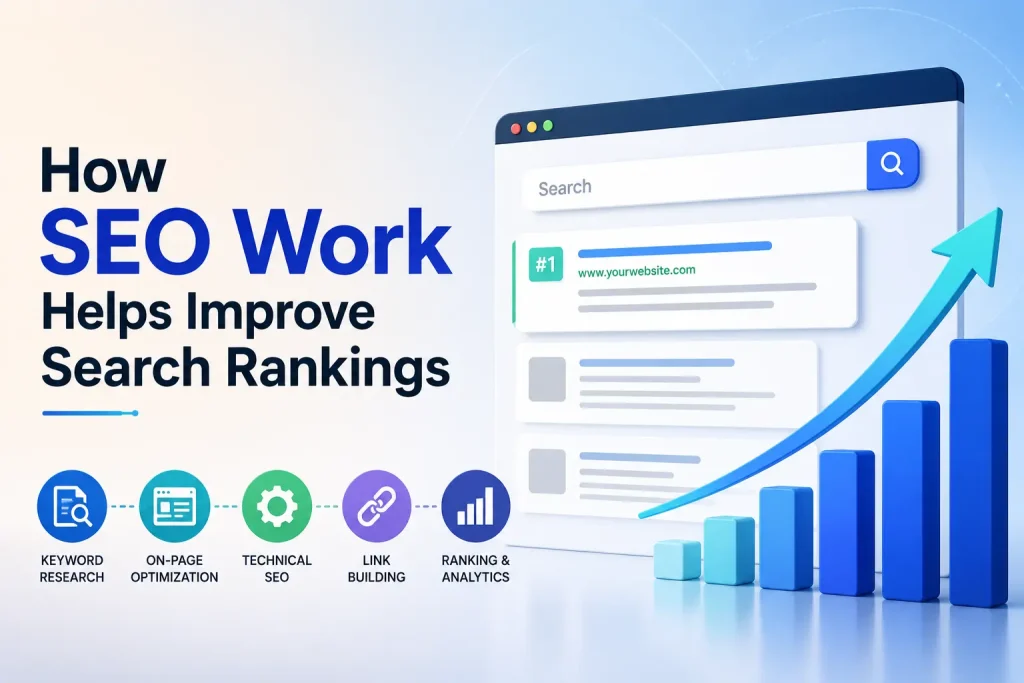
SEO works by helping search engines understand your website and helping users find content that matches what they are searching for. In simple terms, SEO work involves improving a website’s content, structure, technical accessibility, and overall relevance so it can compete for visibility in organic search results. Understanding how SEO works is useful for business owners, marketers, and beginners who want to build a stronger long-term search presence. This guide explains the main processes behind SEO and how they work together. In This Article How Search Engines Discover Websites Search engines use automated systems to discover and understand pages across the web. They can find pages through links, website sitemaps, and other accessible pathways. After discovering a page, search engines analyze its content and technical information to understand what the page is about. This process helps them organize information and determine which pages may be relevant for particular searches. For website owners, this means search engine optimization starts with making important pages accessible, understandable, and useful. How SEO Work Is Evaluated Search engines aim to provide results that best match a user’s query. SEO work therefore involves more than placing keywords on a page. A search engine may consider whether a page: Modern search also increasingly focuses on understanding topics, entities, and relationships between concepts. This is why clear, well-structured, answer-focused content can be valuable for both traditional search results and evolving AI-powered search experiences. The Main Elements of SEO A practical SEO work guide usually includes several connected areas. Content and Keywords Content should answer real questions and provide useful information. Keywords help communicate the topic, but they should always be used naturally. On-Page Optimization This includes improving elements such as page titles, headings, internal links, and content structure so users and search engines can understand the page more clearly. Technical SEO Technical factors help search engines access and process a website effectively. Website structure, mobile usability, and crawlability are examples of areas that may require attention. Authority and Relevance A website can strengthen its online presence by publishing useful content and earning relevant references from other trustworthy websites. SEO Work Examples for Businesses SEO can look different depending on the business and its goals. For example, a company offering professional services may create pages explaining its services, publish articles answering common customer questions, and improve its website structure. A local business may focus on providing accurate business information and creating useful content for people searching for relevant local services. These SEO work examples show why there is no single strategy suitable for every website. The right approach depends on the audience, competition, website condition, and business objectives. Building an Effective SEO Work Strategy An effective SEO work strategy begins with understanding what your audience searches for and why they search for it. A practical approach includes: The most useful search engine optimization basics tips are simple: focus on people first, answer questions clearly, organize information properly, and avoid shortcuts or keyword stuffing. Frequently Asked Questions 1. How does SEO work in simple words? SEO works by improving a website’s content, structure, and accessibility so search engines can better understand it and match relevant pages with user searches. 2. How long does SEO work take? SEO timelines vary depending on factors such as competition, website condition, content quality, and the improvements being made. SEO is generally an ongoing process. 3. Do keywords still matter for SEO? Yes, keywords help communicate the subject of a page. However, they should be used naturally alongside useful content that matches search intent. 4. Can a business do SEO without professional help? Businesses can learn and implement basic SEO practices. However, professional support can be useful when a website requires technical analysis, strategic planning, content optimization, or ongoing SEO management. Conclusion SEO works through a combination of useful content, clear website structure, technical accessibility, and relevance to what people are searching for. A successful approach focuses on understanding users and continuously improving the website rather than looking for quick ranking shortcuts. Build a More Effective Search Strategy for Your Business Understanding how SEO works is one thing; applying it consistently to a business website requires planning, analysis, and ongoing optimization. TVM Info Solutions provides professional Search Engine Optimization services, including keyword optimization, on-page and off-page optimization, and analytics-based SEO support. Businesses looking to improve their search strategy can connect with the team to discuss their specific requirements. 📞 Call Us: +919004590039📧 Email: contact@tvminfo.com Our Business Automation Solutions: 💬 ChatKar – Turn WhatsApp chats into sales: https://chatkar.com/🌟 StarCreator – Build AI automations: https://starcreator.co/📧 AutoMailSend – Own your email marketing: https://automailsend.com/🎯 AttractLead – Capture & convert leads automatically: https://attractlead.in/ Connect with us:📸 Instagram: https://www.instagram.com/tvm_infosolution/📘Facebook: https://www.facebook.com/people/Tvm-Info-Solutions-Pvt-Ltd/61555896761755/🔗 LinkedIn: https://in.linkedin.com/company/tvminfo▶️ YouTube: https://www.youtube.com/@tvminfosolutions

what is seo
SEO

Understanding SEO: How Search Visibility Works

SEO, or Search Engine Optimization, is the process of improving a website so it can become more visible in relevant search engine results. When people search for products, services, answers, or information online, effective SEO can help them discover the right website. For beginners and business owners, understanding SEO is an important first step toward building a stronger online presence. This SEO guide explains the basics, how SEO works, and what you should consider when creating an SEO strategy. In This Article What Is SEO and Why Does It Matter? SEO stands for Search Engine Optimization. It involves improving different aspects of a website and its content to make it easier for search engines to understand and present relevant pages to users. For example, if someone searches for “digital marketing services,” a well-optimized website with useful and relevant information may have a better opportunity to appear for related searches. SEO matters because it can help businesses: However, SEO is not simply about adding keywords to a page. Good optimization focuses on content quality, website usability, relevance, and technical factors. How SEO Works Search engines use automated systems to discover, understand, and organize web pages. They then aim to show results that are relevant to a user’s search query. A basic SEO process includes: Search Engine Optimization results can depend on many factors, which is why there is no single shortcut that works for every website. The Main Types of SEO Understanding the main areas of SEO basics helps beginners see how different activities work together. On-Page SEO On-page SEO focuses on elements within your website, including content, page titles, headings, internal links, and relevant keyword usage. Technical SEO Technical SEO focuses on the website’s technical structure. Areas such as crawlability, mobile usability, page organization, and site performance can affect how search engines access and understand pages. Off-Page SEO Off-page SEO involves factors beyond your website that can contribute to its online presence and authority, including earning relevant mentions and links from other websites. Basic SEO Tips for Beginners If you are just starting, focus on practical improvements rather than trying to optimize everything at once. Some useful Search Engine Optimization basics tips include: For SEO examples, a local service business could create a helpful page explaining its services, answer common customer questions, and make it easy for visitors to contact the business. Building an Effective SEO Strategy A strong SEO strategy starts with understanding your business goals and audience. Instead of targeting random keywords, focus on searches that are genuinely relevant to your products, services, or customers. Your strategy may include keyword research, content planning, on-page optimization, technical improvements, and performance monitoring. The right approach depends on your website, competition, industry, and objectives. SEO also requires ongoing attention because websites, search behavior, and search engine systems can change over time. Frequently Asked Questions 1. What is SEO in simple words? SEO is the process of improving a website to help it become more visible in relevant search engine results and reach people searching for related information, products, or services. 2. Can beginners learn SEO? Yes. Beginners can learn SEO by understanding search intent, keywords, content optimization, on-page SEO, and basic technical concepts. Practical implementation is important for developing SEO knowledge. 3. How long does SEO take to show results? SEO timelines vary depending on factors such as website condition, competition, industry, content quality, and the work being implemented. SEO should generally be approached as an ongoing process rather than an instant solution. 4. What is the difference between SEO and paid advertising? SEO focuses on improving organic visibility in search results, while paid advertising involves paying for advertising placements. Both can be part of a broader digital marketing strategy. Conclusion SEO helps businesses and website owners improve how effectively their online content connects with relevant search queries. By understanding search intent, creating useful content, and maintaining a well-optimized website, beginners can build a stronger foundation for long-term search visibility. Need Professional Help Building the Right SEO Strategy? Implementing an effective SEO strategy requires the right planning, technical understanding, content approach, and ongoing optimization. TVM Info Solutions provides professional Search Engine Optimization services, including keyword optimization, on-page and off-page SEO, and analytics-based support tailored to business requirements. To discuss your SEO requirements and explore the right approach for your website, connect with the us. 📞 Call Us: +919004590039📧 Email: contact@tvminfo.com Our Business Automation Solutions: 💬 ChatKar – Turn WhatsApp chats into sales: https://chatkar.com/🌟 StarCreator – Build AI automations: https://starcreator.co/📧 AutoMailSend – Own your email marketing: https://automailsend.com/🎯 AttractLead – Capture & convert leads automatically: https://attractlead.in/ Connect with us:📸 Instagram: https://www.instagram.com/tvm_infosolution/📘Facebook: https://www.facebook.com/people/Tvm-Info-Solutions-Pvt-Ltd/61555896761755/🔗 LinkedIn: https://in.linkedin.com/company/tvminfo▶️ YouTube: https://www.youtube.com/@tvminfosolutions

Scroll to Top