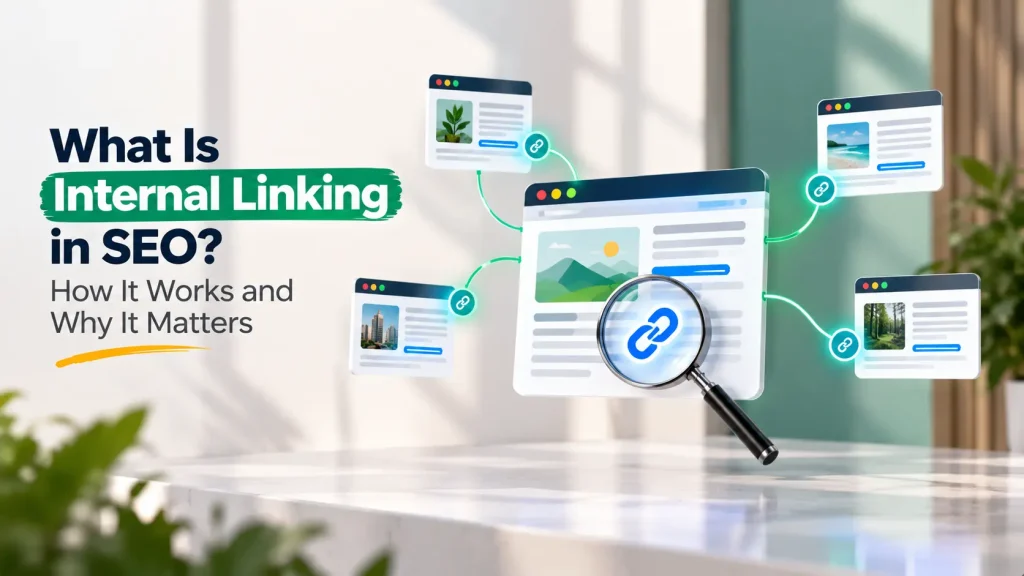
Internal Linking in SEO is an important practice that helps connect different pages on the same website. These links guide visitors toward relevant information while helping search engines understand the relationship between your pages and content.
A well-planned internal linking structure can make a website easier to navigate, improve content discoverability, and support a stronger overall SEO strategy. In this guide, you will learn what is internal linking, how it works, why it matters, and how to use it effectively.
In This Article
- What internal linking means
- How internal linking works
- Benefits of internal linking
- Best practices for internal links
- Common mistakes to avoid
What Is Internal Linking?
Internal links are hyperlinks that connect one page of a website to another page on the same domain.
For example, a blog about SEO-friendly content may link to another article about keyword placement or a relevant service page about Search Engine Optimization.
The main purpose of internal linking is to create logical connections between related pages. This helps users discover additional useful information without needing to search for it separately.
A strong internal linking structure should always focus on relevance. The linked page should provide genuine additional value to the reader.
How Internal Linking Works in SEO
Understanding how internal linking works starts with website structure. Search engines discover pages by following links, including links between pages on your own website.
When relevant pages are connected, search engines can better understand how different topics relate to each other. For example, several articles about content optimization, keywords, URLs, and image SEO can support a broader topic cluster around Search Engine Optimization.
Internal links also help visitors move naturally through your website. Someone reading a beginner-level article can easily continue to a more detailed guide when relevant links are placed in the right context.
This creates a better navigation experience and helps important content become easier to discover.
Benefits of Internal Linking
The benefits of internal linking extend beyond simply connecting pages. A thoughtful strategy can help improve:
- Website navigation by guiding users toward relevant information.
- Content discoverability by making deeper pages easier to find.
- Topic relationships by connecting content covering similar subjects.
- User experience by providing helpful next steps.
- Website structure by organizing content into logical topic groups.
Internal links are especially valuable for websites with a growing number of blogs, service pages, and resources. Without proper connections, useful pages can become difficult for visitors and search engines to discover.
Best Practices for Internal Linking in SEO
For effective internal linking in SEO, focus on quality rather than adding links everywhere.
Use descriptive anchor text that clearly explains what users can expect after clicking. For example, “learn more about keyword placement” is more useful than a generic phrase such as “click here.”
Link only to pages that are genuinely relevant to the surrounding content. A natural link should feel like a helpful continuation of the topic.
It is also useful to connect related articles strategically. For example, an article about How to Write SEO-Friendly Content can naturally connect with topics such as URL optimization, image optimization, and keyword placement.
Review older content regularly to identify useful opportunities for linking to newer and relevant pages.
Common Internal Linking Mistakes to Avoid
One common mistake is adding too many links without considering relevance. This can make content distracting and less useful.
Another mistake is repeatedly using the exact same keyword-rich anchor text. Natural language and context should guide your anchor text choices.
Avoid linking to unrelated pages simply because you want to promote them. The importance of internal linking comes from creating meaningful connections that help users and support a clear website structure.
Frequently Asked Questions
Q1. What is internal linking in SEO?
Ans: Internal linking in SEO means connecting one page of your website to another relevant page on the same website using hyperlinks.
Q2. Why is internal linking important?
Ans: Internal linking helps users navigate your website, discover relevant content, and understand the connection between different topics and pages.
Q3. How many internal links should a page have?
Ans: There is no single fixed number. Add internal links when they are relevant and useful to the reader rather than adding links unnecessarily.
Q4. What makes a good internal link?
Ans: A good internal link connects to a relevant page, uses clear anchor text, and provides additional value related to the topic being discussed.
Conclusion
Internal Linking in SEO helps create a more connected, organized, and user-friendly website. By linking relevant pages naturally, businesses can improve content discovery, navigation, and topical structure.
The best approach is simple: create links because they help the reader, not merely because they contain a keyword.
Build a Better SEO Structure for Your Website
A strong internal linking strategy requires an understanding of your website content, page relationships, and broader Search Engine Optimization goals. TVM Info Solutions provides professional SEO support to help businesses develop a structured and relevant approach to improving their search presence.
📞 Call Us: +919004590039
📧 Email: contact@tvminfo.com
Our Business Automation Solutions:
💬 ChatKar – Turn WhatsApp chats into sales
🌟 StarCreator – Build AI automations
📧 AutoMailSend – Own your email marketing
🎯 AttractLead – Capture & convert leads automatically