KeywordResearch

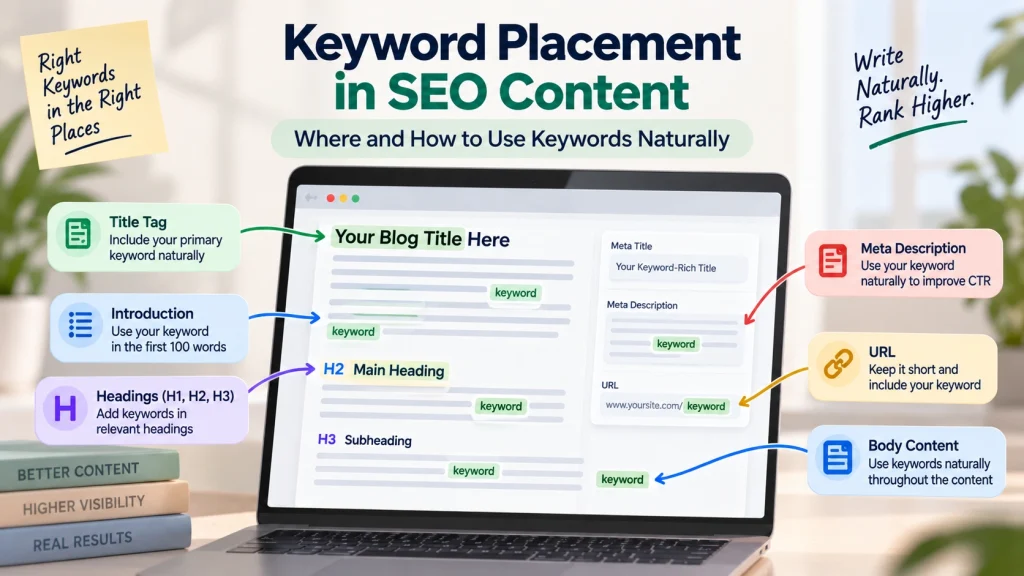
Keyword Placement in SEO Content Where and How to Use Keywords Naturally
SEO

Keyword Placement in SEO Content: Where and How to Use Keywords Naturally

Keyword placement in SEO content is about using relevant search terms in the right places so that both search engines and readers can clearly understand what your content is about. The goal is not to repeat a keyword as often as possible. Instead, effective placement helps communicate the topic naturally while maintaining readability and value. If you are wondering where to place keywords or how to use keywords in content, this guide explains the most important areas to focus on and the mistakes to avoid. In This Article What Is Keyword Placement in SEO Content? Keyword placement refers to the strategic use of primary keywords, secondary keywords, and related terms throughout a webpage or article. A well-optimized page should make its main topic clear without sounding repetitive. Search engines evaluate many signals to understand content, including the page title, headings, body content, URL, and overall topical relevance. For example, an article targeting Keyword Placement In SEO Content should naturally discuss topics such as content optimization, search intent, headings, keyword relevance, and readable content. Where to Place Keywords for Better SEO Knowing where to place keywords can help you structure content more effectively. Important locations include: These placements should improve clarity rather than make the content feel artificially optimized. How to Use Keywords in Content Naturally When learning how to place keywords in content, focus on meaning rather than repetition. Use your primary keyword where it fits naturally, then support it with secondary keywords, synonyms, and closely related concepts. For instance, instead of repeatedly using the same phrase, you can naturally include terms such as keyword placement best practices, SEO-friendly content, and how to use keywords in content. This approach creates stronger topical relevance while making the article easier to read. Each section should answer a specific question or provide useful information for the reader. Keyword Placement Best Practices Effective URL optimization for SEO and content optimization in general starts with understanding what the user is searching for. Before adding keywords, identify the search intent behind the topic. Follow these practical best practices: Modern search systems increasingly focus on context and topical relevance, so useful content matters more than simply repeating an exact phrase. Common Keyword Placement Mistakes to Avoid One of the biggest mistakes is keyword stuffing. Repeating the same keyword excessively can make content difficult to read and reduce its overall quality. Other common mistakes include using irrelevant keywords, creating unnatural headings, and adding keywords where they do not support the topic. The best approach is simple: use keywords to help define the subject, then provide clear and useful answers around that subject. Frequently Asked Questions Q1. What is keyword placement in SEO? Ans: Keyword placement in SEO means using relevant keywords strategically in areas such as the title, headings, introduction, body content, meta description, and URL to clearly communicate a page’s topic. Q2. Where should I place keywords in an article? Ans: You can place keywords naturally in the SEO title, H1, introduction, relevant headings, body content, meta description, and URL. Not every keyword needs to appear in every location. Q3. How many times should a keyword appear in content? Ans: There is no ideal keyword frequency that works for every article. Use the keyword naturally where it helps explain the topic, without repeating it unnecessarily. Q4. Should I use the exact same keyword in every heading? Ans: No. Use keywords in headings only when they accurately describe the section. Clear and descriptive headings are more useful than forcing the same keyword repeatedly. Conclusion Effective Keyword Placement In SEO Content is about relevance, context, and readability. Place important keywords in meaningful areas, support them with related terms, and ensure every section genuinely helps the reader. A well-structured page communicates its topic clearly without sacrificing content quality. Build More Effective SEO Content With Professional Support Creating SEO content requires more than inserting keywords into a page. Businesses need the right balance of keyword research, search intent, content structure, and on-page optimization. TVM Info Solutions provides professional Search Engine Optimization (SEO) support to help businesses build stronger and more relevant digital content strategies. ๐Ÿ“ž Call Us: +919004590039๐Ÿ“ง Email: contact@tvminfo.com Our Business Automation Solutions:ย ๐Ÿ’ฌ ChatKar โ€“ Turn WhatsApp chats into sales๐ŸŒŸ StarCreator โ€“ Build AI automations๐Ÿ“ง AutoMailSend โ€“ Own your email marketing๐ŸŽฏ AttractLead โ€“ Capture & convert leads automatically

Keyword Difficulty What It Means and How to Use It for SEO
SEO

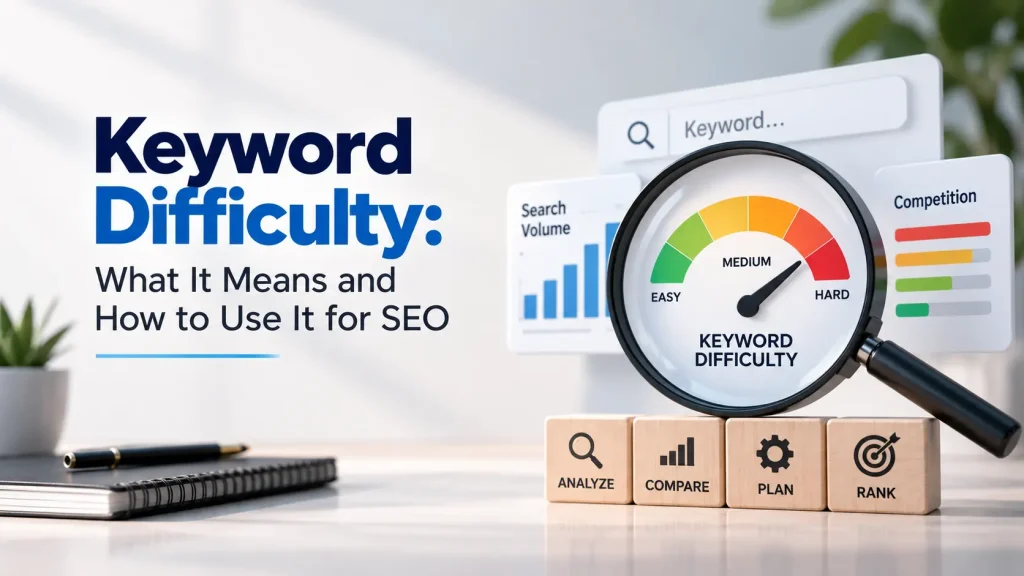
Keyword Difficulty: What It Means and How to Use It for SEO

Keyword Difficulty is a useful SEO metric that helps estimate how challenging it may be to rank for a particular keyword in search results. For businesses planning an SEO strategy, understanding this metric can help prioritize realistic keyword opportunities and create a more focused content plan. However, a keyword difficulty score should never be viewed as a guarantee of ranking success or failure. This article explains what keyword difficulty is, how works, and how to use it effectively when selecting keywords. In This Article What Is Keyword Difficulty? What is keyword difficulty? In simple terms, it is an estimate of how difficult it may be for a webpage to rank organically for a specific search query. The keyword difficulty meaning can vary depending on the SEO tool being used. Different tools use their own calculations and data sources, which means the same keyword may receive different difficulty scores across platforms. Generally, keyword difficulty analysis considers the strength of pages already ranking for a search term. This can help marketers understand whether they are competing against highly authoritative websites or whether there may be opportunities for newer or smaller websites. What Affects Keyword Difficulty? Several factors can influence the competitiveness of a keyword. Common considerations include: For example, a broad keyword may have strong competition because many established websites have created detailed content around the topic. A more specific long-tail keyword may sometimes offer a clearer opportunity because it targets a narrower search intent. This is why keyword selection should involve more than simply choosing the lowest difficulty score. How Does a Keyword Difficulty Score Work? A keyword difficulty score is usually presented on a numerical scale by SEO tools. In general, a higher score indicates stronger competition, while a lower score suggests that ranking may be comparatively easier. However, the numbers are best used as a comparison tool rather than an absolute ranking prediction. For example, two keywords may have similar difficulty scores but completely different search results. One may contain highly relevant business websites, while another may include large publishers or established brands. Reviewing the actual search results is therefore an important part of understanding how keyword difficulty works. How to Use Keyword Difficulty for Keyword Research The most effective way to use Keyword Difficulty is alongside other keyword research factors. Consider: A practical SEO strategy often includes a mix of competitive keywords and more specific opportunities. This helps businesses build topical relevance while targeting searches that are meaningful to their audience. Why Keyword Difficulty Should Not Be Used Alone A low keyword difficulty score does not automatically mean a keyword will generate valuable traffic. Similarly, a difficult keyword may still be worth targeting if it is highly relevant to your business and supports an important content strategy. The best approach is to combine Keyword Difficulty with search intent, content quality, relevance, and an analysis of the current search results. Strong SEO decisions come from understanding the complete opportunity not relying on one metric alone. Frequently Asked Questions Q1. What is keyword difficulty in SEO? Ans: Keyword Difficulty in SEO is a metric used to estimate how challenging it may be to rank for a particular keyword in organic search results. Q2. Is a low keyword difficulty score always better? Ans: No. A low score may indicate less competition, but the keyword should also be relevant to your business and match the right search intent. Q3. How keyword difficulty works in SEO tools? Ans: How keyword difficulty works depends on the SEO tool. Tools typically analyze competitive factors related to the pages already ranking for a keyword and present an estimated difficulty score. Q4. Should businesses target high-difficulty keywords? Ans: Yes, when appropriate. High-difficulty keywords can still be valuable when they are relevant to important business topics. They may require stronger content, authority, and a longer-term SEO strategy. Conclusion Keyword Difficulty helps businesses evaluate the competitive landscape of potential keywords, but it should be used as part of a broader SEO decision-making process. By combining difficulty data with search intent, relevance, and content opportunities, businesses can build a more practical and focused keyword strategy. Build a Smarter Keyword Strategy for Better Search Visibility Choosing the right keywords requires more than selecting terms with low competition. A professional SEO strategy should consider business relevance, search intent, competition, and content opportunities together. TVM Info Solutions provides professional SEO service and digital marketing strategies for businesses looking to strengthen their search visibility with a focused approach. Discuss your requirements with our team to build a strategy aligned with your business goals. ๐Ÿ“ž Call Us: +919004590039๐Ÿ“ง Email: contact@tvminfo.com Our Business Automation Solutions: ๐Ÿ’ฌ ChatKar โ€“ Turn WhatsApp chats into sales: https://chatkar.com/๐ŸŒŸ StarCreator โ€“ Build AI automations: https://starcreator.co/๐Ÿ“ง AutoMailSend โ€“ Own your email marketing: https://automailsend.com/๐ŸŽฏ AttractLead โ€“ Capture & convert leads automatically: https://attractlead.in/

What Are LSI Keywords Meaning Examples and SEO Relevance
SEO

What Are LSI Keywords? Meaning, Examples, and SEO Relevance

LSI Keywords are often discussed in SEO as words and phrases that are closely related to a main topic. However, the term can sometimes be misunderstood. If you are learning what are LSI keywords, it is important to understand both their commonly used meaning and how modern search engines actually evaluate content. Rather than simply repeating one keyword, effective SEO content should cover a topic naturally using relevant concepts, terms, and context. This article explains the LSI keywords meaning, provides examples, and shows how to use related keywords effectively. In This Article What Are LSI Keywords? The term LSI stands for Latent Semantic Indexing, an older information-retrieval concept. In SEO discussions, LSI keywords are commonly used to describe words and phrases that are contextually related to a primary keyword. For example, if the main topic is digital marketing, related terms may include SEO, content marketing, social media marketing, and online advertising. These related terms help create a clearer topical context for readers. However, modern search engines do not simply rely on a list of โ€œLSI keywords.โ€ They use sophisticated systems to understand meaning, relevance, context, and relationships between topics. LSI Keywords Examples Understanding LSI keywords examples can make the concept easier to understand. Suppose your primary keyword is โ€œSEO services.โ€ Naturally related terms might include: These phrases should only be used when they genuinely help explain the topic. The goal is not to add every related term possible. Instead, your content should answer the reader’s questions comprehensively and naturally. What Is the Role of LSI Keywords in SEO? When discussing LSI keywords in SEO, the more useful modern approach is to focus on semantic relevance rather than treating LSI keywords as a ranking trick. Search engines need to understand what a page is about. Using relevant concepts naturally can provide stronger context and help create more complete content. For example, an article about email marketing may naturally discuss email campaigns, subscribers, subject lines, conversions, and audience engagement. These concepts help readers understand the subject while creating meaningful topical relevance. The key principle is simple: write comprehensively about the topic instead of repeatedly using the same keyword. How to Use LSI Keywords and Related Terms Naturally If you are learning how to use LSI keywords, start with your audience and search intent. First, identify the main topic and the primary question your content needs to answer. Then consider the related questions, concepts, and terms a reader would reasonably expect to find. You can include relevant terms in: Avoid forcing keywords into every section. A well-written article should sound natural and provide useful information first. Common Mistakes When Using Related Keywords One common mistake is keyword stuffing. Adding the same keyword or many related phrases repeatedly can make content difficult to read. Another mistake is using unrelated terms simply because they have search volume. Every word should support the page’s topic and user intent. The best approach is to create clear, useful, and topic-focused content. Relevant keywords and semantic terms should appear naturally as part of a complete explanation. Frequently Asked Questions Q1. What are LSI keywords? Ans: LSI keywords are commonly described as words and phrases related to a main topic or keyword. In modern SEO, it is more accurate to focus on contextually relevant terms and semantic relationships. Q2. Are LSI keywords important for SEO? Ans: Related terms can help create comprehensive and contextually relevant content. However, they should not be treated as a separate SEO shortcut or used excessively. Q3. How do I find LSI keywords examples for my content? Ans: Look at the main topic, related user questions, relevant concepts, and terminology naturally associated with the subject. The focus should be on topical relevance, not building a random keyword list. Q4. Should I use LSI keywords in every paragraph? Ans: No. Keywords and related terms should only appear where they make sense. Natural readability and useful content are more important than repeating keywords. Conclusion LSI Keywords are best understood today as part of a broader approach to semantic and topic-focused content. Instead of searching for a formula of related words, focus on answering the reader’s questions clearly and covering the subject comprehensively. This creates content that is more useful, relevant, and easier for both users and search systems to understand. Build More Relevant and Effective SEO Content Creating content around the right topics requires more than adding keywords to a page. TVM Info Solutions provides professional SEO and digital marketing support to help businesses develop content strategies focused on relevance, search intent, and meaningful audience value. Businesses looking to strengthen their content and search strategy can discuss their requirements with our team. ๐Ÿ“ž Call Us: +919004590039๐Ÿ“ง Email: contact@tvminfo.com Our Business Automation Solutions: ๐Ÿ’ฌ ChatKar โ€“ Turn WhatsApp chats into sales: https://chatkar.com/๐ŸŒŸ StarCreator โ€“ Build AI automations: https://starcreator.co/๐Ÿ“ง AutoMailSend โ€“ Own your email marketing: https://automailsend.com/๐ŸŽฏ AttractLead โ€“ Capture & convert leads automatically: https://attractlead.in/

Primary and Secondary Keywords What They Are and How to Use Them in SEO
SEO

Primary and Secondary Keywords: What They Are and How to Use Them in SEO

Primary and secondary keywords are essential parts of a well-planned SEO content strategy. They help define the main topic of a page while supporting it with related search terms that improve topical relevance. Understanding the difference between primary and secondary keywords can help businesses create more focused, useful, and search-friendly content. This article explains what are primary keywords, what are secondary keywords, and how to use both naturally in your website content. In This Article What Are Primary Keywords? A primary keyword is the main search term a webpage or article is designed to target. It represents the central topic and usually reflects the primary search intent of the page. For example, if an article explains different types of keywords, the main target phrase could be Primary and Secondary Keywords. Primary keywords in SEO should be closely connected to the main purpose of the content. They can naturally appear in important locations such as the page title, introduction, headings, body content, meta title, and URL slug where appropriate. However, using the same keyword repeatedly does not improve content quality. The priority should always be creating content that clearly answers what the user is searching for. What Are Secondary Keywords? Secondary keywords are related terms, variations, and supporting phrases connected to the main keyword. They help search engines and readers understand the topic in greater detail. For example, secondary keywords for this topic may include: These phrases should support the main topic naturally. They can be used in relevant sections, examples, subtopics, and FAQs when they genuinely add value. Primary vs Secondary Keywords: What Is the Difference? The main difference is their role in the content. A primary keyword represents the central topic of the page. A secondary keyword supports that topic by covering related questions, concepts, and variations. For example, think of the primary keyword as the main subject of a conversation, while secondary keywords provide the supporting details needed to explain that subject completely. Using both effectively helps create content with stronger topical relevance. Instead of focusing on repeating one exact phrase, the content can cover the topic naturally and answer multiple related user questions. How to Use Primary and Secondary Keywords Effectively A practical keyword strategy starts with understanding search intent. Before selecting keywords, consider what the user actually wants to learn, compare, find, or purchase. Use your primary keyword to define the main topic of the page. Then select relevant secondary keywords that support important aspects of that topic. Keep these points in mind: A strong keyword analysis process should consider relevance, search intent, competition, and how well a keyword matches your business or website goals. Common Mistakes to Avoid When Using Keywords One common mistake is keyword stuffing. Repeating the same phrase excessively can make content difficult to read and reduce its usefulness. Another mistake is targeting keywords that are not relevant to the page or the intended audience. A keyword may have search demand but still be unsuitable if it does not match your business offering or content purpose. The best approach is to create helpful, focused, and well-structured content where keywords support the topic rather than control the writing. Frequently Asked Questions Q1. What are primary keywords in SEO? Ans: Primary keywords in SEO are the main search terms a webpage targets. They represent the central topic and should closely match the page’s primary purpose and search intent. Q2. What are secondary keywords? Ans: Secondary keywords are related words, phrases, and search queries that support the main topic. They help provide additional context and cover related user searches. Q3. How many primary keywords should a page have? Ans: In most cases, a page should have one clear primary keyword or primary topic. Related variations and supporting keywords can then be used naturally throughout the content. Q4. What is the difference between primary and secondary keywords? Ans: The primary keyword defines the main topic, while secondary keywords support that topic with related concepts, variations, and additional search queries. Conclusion Understanding primary and secondary keywords helps create more focused and relevant website content. The primary keyword establishes the main topic, while secondary keywords help expand the topic and answer related user needs. The goal is not to use more keywords it is to use the right keywords in the right context while creating genuinely useful content. Build a More Effective Keyword Strategy for Your Website Choosing the right keywords requires more than selecting popular search terms. Businesses need a strategy based on relevance, search intent, audience needs, and business goals. TVM Info Solutions provides professional support for businesses looking to strengthen their SEO and digital marketing strategy with a more focused approach to keyword research and content planning. ๐Ÿ“ž Call Us: +919004590039๐Ÿ“ง Email: contact@tvminfo.com Our Business Automation Solutions: ๐Ÿ’ฌ ChatKar โ€“ Turn WhatsApp chats into sales: https://chatkar.com/๐ŸŒŸ StarCreator โ€“ Build AI automations: https://starcreator.co/๐Ÿ“ง AutoMailSend โ€“ Own your email marketing: https://automailsend.com/๐ŸŽฏ AttractLead โ€“ Capture & convert leads automatically: https://attractlead.in/

How to Choose the Right Keywords for Better SEO Results
SEO

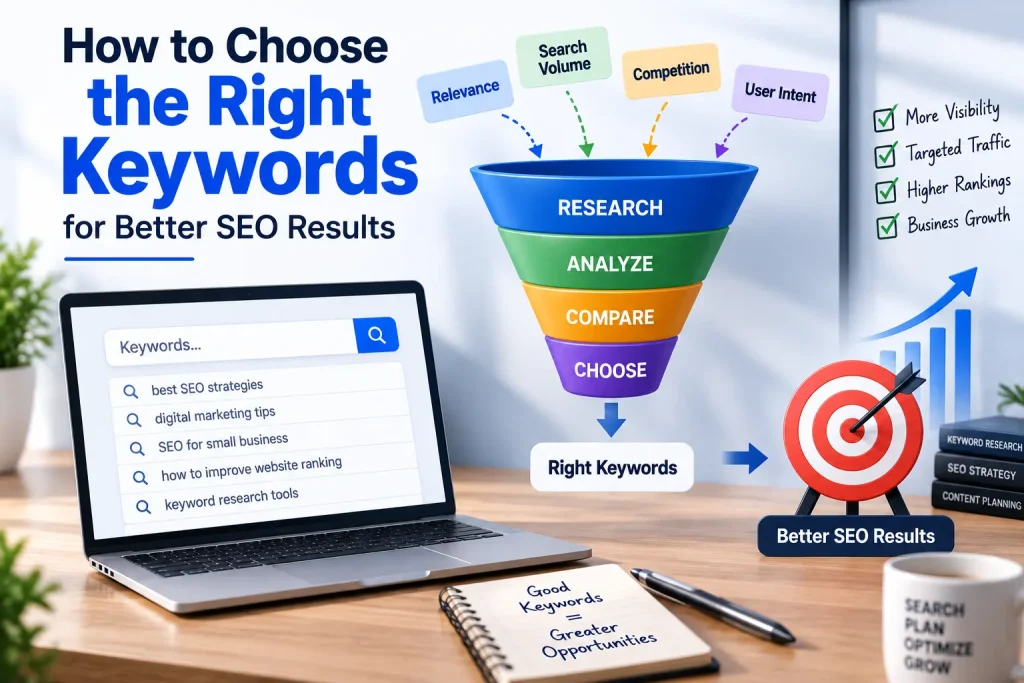
How to Choose the Right Keywords for Better SEO Results

Choosing the right keywords is one of the most important parts of building an effective SEO strategy. The keywords you target influence the audience that discovers your website, the type of traffic you attract, and how relevant your content is to user searches. To Choose The Right Keywords, businesses need to look beyond search volume. Keyword selection should consider search intent, relevance, competition, and the potential value of the audience behind each search. This guide explains How to Choose the Right Keywords for Your Website using a practical approach. In This Article 1. Understand Your Audience and Search Intent Before starting keyword analysis, understand what your target audience is actually searching for. A keyword may have significant search volume but still bring the wrong visitors if it does not match your business or content. Start by identifying the questions, problems, products, or services your audience is looking for. Then consider the search intent behind each query. Common search intents include: The best keywords connect your website content with a genuine user need. 2. Research Relevant Keyword Opportunities Effective keyword research starts with relevant topics rather than randomly collecting popular search terms. Think about your products, services, customer questions, and industry-specific topics. Use keyword research tools to discover related searches, long-tail keywords, and variations around your main topic. These can reveal valuable keyword research opportunities that may be more specific and relevant than broad terms. For example, instead of targeting only a broad keyword, a business may find more useful opportunities by targeting specific searches that clearly describe what users need. 3. Analyze Search Volume and Competition Search volume helps you understand how often people may search for a keyword, but it should never be the only factor behind keyword selection. A high-volume keyword can attract significant attention but may also face strong competition. A lower-volume keyword may be easier to target and bring visitors with more specific intent. When conducting keyword competition analysis, consider: A balanced strategy often combines broader keywords with specific long-tail opportunities. 4. Evaluate Relevance and Business Value The right keyword should be closely connected to what your business offers. Traffic alone does not automatically create meaningful business results. Ask yourself: Would someone searching for this keyword benefit from my website or service? A relevant keyword should match your content and help attract an audience that is genuinely interested in your business. This makes keyword analysis more useful because you are evaluating potential value, not simply chasing traffic numbers. 5. Build a Balanced Keyword Strategy The strongest approach is to create a keyword strategy around a group of related topics. Include a mix of primary keywords, supporting keywords, long-tail searches, and question-based queries. This helps your website create deeper topical coverage while keeping every page focused on a clear subject. Review your keyword performance regularly and refine your strategy as your website grows. Search behaviour, competition, and business priorities can change, so keyword selection should remain an ongoing part of your SEO planning. Frequently Asked Questions Q1. How do I choose the right keywords for my website? Ans: To Choose The Right Keywords, focus on relevance, search intent, search volume, competition, and business value. The best keyword is one that matches both what users want and what your website can genuinely provide. Q2. Should I always target high-volume keywords? Ans: No. High-volume keywords can be valuable, but they may also be highly competitive. Combining them with specific long-tail keywords can create a more balanced SEO strategy. Q3. What is keyword competition analysis? Ans: Keyword competition analysis involves evaluating how difficult it may be to compete for visibility against existing pages targeting a particular search query. Q4. How often should keyword research be updated? Ans: It is useful to review your keyword research regularly, especially when creating new content, launching services, or changing your SEO strategy. Conclusion Learning how to Choose The Right Keywords requires more than selecting terms with the highest search volume. A successful strategy focuses on relevance, search intent, competition, and business value. By combining careful keyword analysis with useful, audience-focused content, businesses can build a stronger foundation for long-term search visibility. Build a More Effective Keyword Strategy for Your Business Choosing relevant keywords and organizing them into a practical SEO strategy can require detailed research and analysis. TVM Info Solutions provides professional SEO and digital marketing support to help businesses strengthen their search visibility with strategies aligned with their goals and target audience. ๐Ÿ“ž Call Us: +919004590039๐Ÿ“ง Email: contact@tvminfo.com Our Business Automation Solutions: ๐Ÿ’ฌ ChatKar โ€“ Turn WhatsApp chats into sales: https://chatkar.com/๐ŸŒŸ StarCreator โ€“ Build AI automations: https://starcreator.co/๐Ÿ“ง AutoMailSend โ€“ Own your email marketing: https://automailsend.com/๐ŸŽฏ AttractLead โ€“ Capture & convert leads automatically: https://attractlead.in/

How to Find Low-Competition Keywords for Better SEO Opportunities
SEO

How to Find Low-Competition Keywords for Better SEO Opportunities

Finding the right keywords is not only about choosing terms with high search volume. Businesses also need to identify realistic opportunities where their content can compete. Learning how to Find Low-Competition Keywords can help you discover relevant search terms that match your audience’s needs while facing less competition from established websites. A strong keyword strategy combines relevance, search intent, competition, and content quality. Here is a practical approach to finding valuable keyword opportunities. In This Article What Are Low-Competition Keywords? Low-competition keywords are search terms where it may be comparatively easier to compete in search results than highly competitive terms. However, low competition does not automatically mean a keyword is valuable. The best opportunities are usually relevant to your business, match a clear user need, and can be supported with useful content. For example, a broad keyword may be highly competitive, while a more specific long-tail search query can have clearer intent and fewer competing pages targeting exactly that topic. Start With Low-Competition Keyword Research Effective low-competition keyword research starts with understanding what your audience searches for. Begin by listing your products, services, customer problems, and common questions. You can then explore: These sources can reveal specific phrases that people may use when searching for information, solutions, or services. Instead of targeting only broad terms, look for detailed queries that address a particular problem. These often create useful keyword research opportunities for businesses building topical authority. How to Find Easy-to-Rank Keywords When learning how to find easy-to-rank keywords, look beyond a keyword difficulty score. SEO tools can provide useful estimates, but you should also manually review the search results. Search the keyword and examine: If the existing results are weak, outdated, poorly focused, or incomplete, there may be an opportunity to create more helpful content. The goal is not simply to find a keyword with the lowest competition. The goal is to identify searches where your business can provide a genuinely valuable answer. Perform Keyword Competition Analysis A proper keyword competition analysis helps you understand what you are competing against. Look at the top-ranking pages and ask whether your website can realistically create content that is equally useful or better suited to the user’s needs. Consider factors such as content relevance, search intent, website authority, and topic coverage. Also, avoid judging competition based on one metric alone. A keyword may have a low difficulty score but still be dominated by highly relevant, authoritative pages. Combining tool-based research with manual SERP analysis gives you a more practical view of the opportunity. Choose Keywords That Support Your Business Goals The best keywords should connect with your target audience and business objectives. A highly searchable phrase is not useful if it attracts visitors who are unlikely to benefit from your products or services. Build content around related keyword groups rather than creating separate pages for every small variation. This helps create stronger, more comprehensive content that addresses the topic naturally. For long-term SEO, focus on creating useful pages that satisfy search intent instead of chasing keyword difficulty alone. Frequently Asked Questions Q1. What is a low-competition keyword? Ans: A low-competition keyword is a search term that may be easier to compete for compared with highly competitive keywords, depending on the quality and strength of existing search results. Q2. How do I find low-competition keywords for SEO? Ans: You can use keyword research tools, Google search suggestions, related searches, customer questions, and manual SERP analysis to identify relevant opportunities. Q3. Are low-competition keywords always easy to rank for? Ans: No. Competition scores are estimates. Actual ranking difficulty also depends on search intent, content quality, relevance, and competing websites. Q4. Should I target only low-competition keywords? Ans: No. A balanced keyword strategy can include low-competition opportunities alongside broader and more competitive terms that are relevant to your business. Conclusion Learning how to Find Low-Competition Keywords requires more than selecting terms with a low difficulty score. The strongest opportunities combine relevance, realistic competition, clear search intent, and genuine business value. A thoughtful keyword strategy can help businesses create more focused content and identify opportunities worth pursuing. Build a Smarter Keyword Strategy for Your Business Finding the right keyword opportunities requires careful research and a clear understanding of your audience and search landscape. TVM Info Solutions provides professional Search Engine Optimization (SEO) support to help businesses develop relevant strategies for improving their search visibility and digital presence. ๐Ÿ“ž Call Us: +919004590039๐Ÿ“ง Email: contact@tvminfo.com Our Business Automation Solutions: ๐Ÿ’ฌ ChatKar โ€“ Turn WhatsApp chats into sales: https://chatkar.com/๐ŸŒŸ StarCreator โ€“ Build AI automations: https://starcreator.co/๐Ÿ“ง AutoMailSend โ€“ Own your email marketing: https://automailsend.com/๐ŸŽฏ AttractLead โ€“ Capture & convert leads automatically: https://attractlead.in/

Short Tail vs Long Tail Keywords Whats the Difference
SEO

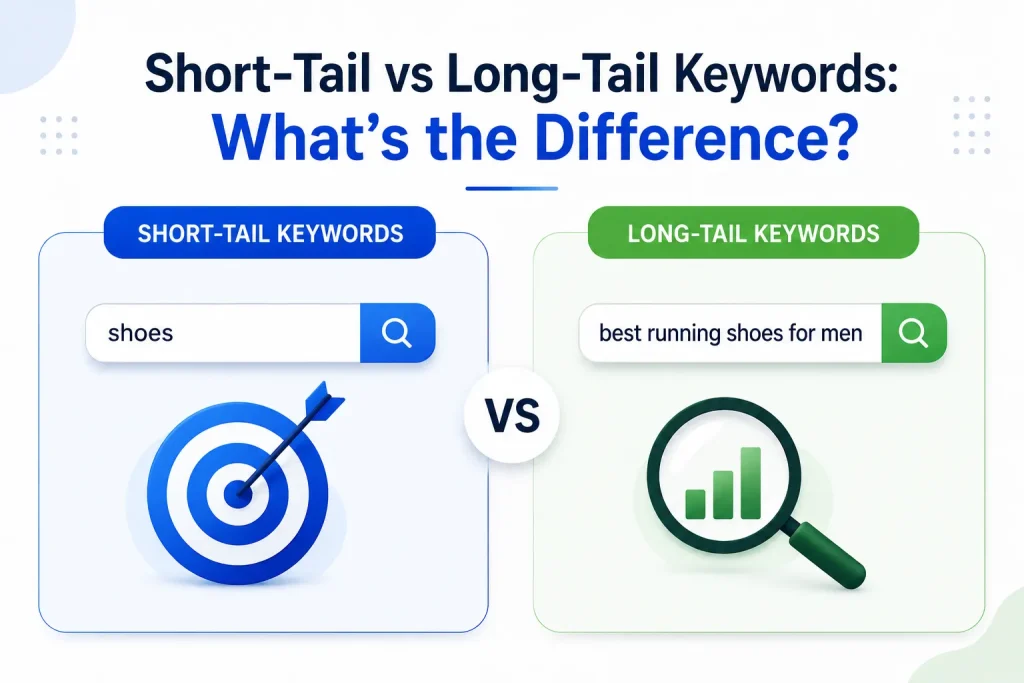
Short-Tail vs Long-Tail Keywords: Whatโ€™s the Difference?

Choosing the right keywords is an important part of an effective SEO strategy. Understanding Short-Tail vs Long-Tail Keywords helps businesses create content that matches what people are actually searching for. While some keywords are broad and highly competitive, others are more specific and closely connected to user intent. This article explains the difference between short-tail and long-tail keywords, provides practical examples, and helps you understand when each keyword type can be useful. In This Article What Are Short-Tail Keywords? Short-tail keywords are broad search terms that usually contain one to three words. They describe general topics and can attract a wide range of searches. For example: These short-tail keyword examples have a broad meaning. Someone searching for SEO, for instance, could be looking for a definition, services, tools, courses, or general information. Because the search intent can vary significantly, short-tail keywords may be more competitive and require strong topical relevance to target effectively. What Are Long-Tail Keywords? Long-tail keywords are more specific search phrases, usually containing several words. They often provide clearer information about what the user wants. Some long-tail keyword examples include: These keywords are more detailed and can help businesses create content for a specific audience or requirement. A longer search phrase often provides stronger clues about the user’s search intent. Short-Tail vs Long-Tail Keywords: The Key Differences The main difference between short-tail keywords vs long-tail keywords is their level of specificity. Short-tail keywords are broad and can reach a larger audience. However, the audience may have different intentions behind the same search term. Long-tail keywords are more detailed and usually focus on a particular need, question, product, or service. For example: The second phrase clearly provides more context. This makes long-tail terms useful for creating focused, relevant content that answers specific user requirements. Neither keyword type is automatically better. The right choice depends on your business goals, audience, content topic, and search intent. When Should You Use Short-Tail Keywords? Short-tail keywords can be useful when building content around broad topics and important SEO keyword categories. They may work well for: For example, a comprehensive page about Search Engine Optimization (SEO) may naturally target broader keyword themes while covering related concepts in detail. The goal should not be to use broad keywords repeatedly. Instead, create useful content that establishes clear topical relevance. When Should You Use Long-Tail Keywords? Long-tail keywords are useful when your content answers a specific question or addresses a particular requirement. They can be effective for: For example, instead of creating generic content about digital marketing, a business could address a specific topic such as digital marketing strategies for local businesses. Using different types of SEO keywords strategically can help businesses build a more complete content structure around both broad topics and specific search queries. How to Choose Between Short-Tail and Long-Tail Keywords A strong keyword strategy usually considers both types of search terms. Start by understanding what your audience wants and the purpose of each page. Use short-tail keywords for broader topics where comprehensive coverage is required. Use long-tail keywords when addressing specific questions, services, or user needs. The most important factor is relevance. Your keywords should match the page content and provide useful information to the intended audience rather than being added simply for search visibility. Frequently Asked Questions Q1. What is the main difference between short-tail and long-tail keywords? Ans: The difference between short-tail and long-tail keywords is mainly specificity. Short-tail keywords are broad, while long-tail keywords are more detailed and targeted. Q2. Are long-tail keywords better for SEO? Ans: Long-tail keywords are not automatically better, but they can be useful for targeting specific user needs and creating focused content. Q3. How many words are in a short-tail keyword? Ans: A short-tail keyword usually contains one to three words, although keyword classification should focus more on specificity than an exact word count. Q4. Can a website use both short-tail and long-tail keywords? Ans: Yes. A well-planned SEO strategy can use both SEO keyword categories to cover broad topics and specific search queries across different pages. Conclusion Understanding Short-Tail vs Long-Tail Keywords helps businesses make better content and keyword decisions. Broad keywords can support major topics, while specific phrases can address clearer user requirements. The best approach is to focus on search intent, relevance, and useful content rather than choosing keywords based only on their length. Build a More Focused Keyword Strategy for Your Business Choosing the right keywords requires more than selecting popular search terms. A professional SEO strategy should consider your audience, business goals, search intent, and the topics your website needs to cover. TVM Info Solutions provides professional digital marketing and SEO support to help businesses build relevant strategies for stronger online visibility and sustainable digital growth. ๐Ÿ“ž Call Us: +919004590039๐Ÿ“ง Email: contact@tvminfo.com Our Business Automation Solutions: ๐Ÿ’ฌ ChatKar โ€“ Turn WhatsApp chats into sales: https://chatkar.com/๐ŸŒŸ StarCreator โ€“ Build AI automations: https://starcreator.co/๐Ÿ“ง AutoMailSend โ€“ Own your email marketing: https://automailsend.com/๐ŸŽฏ AttractLead โ€“ Capture & convert leads automatically: https://attractlead.in/

Types of SEO Keywords A Guide to Choosing the Right Keywords
SEO

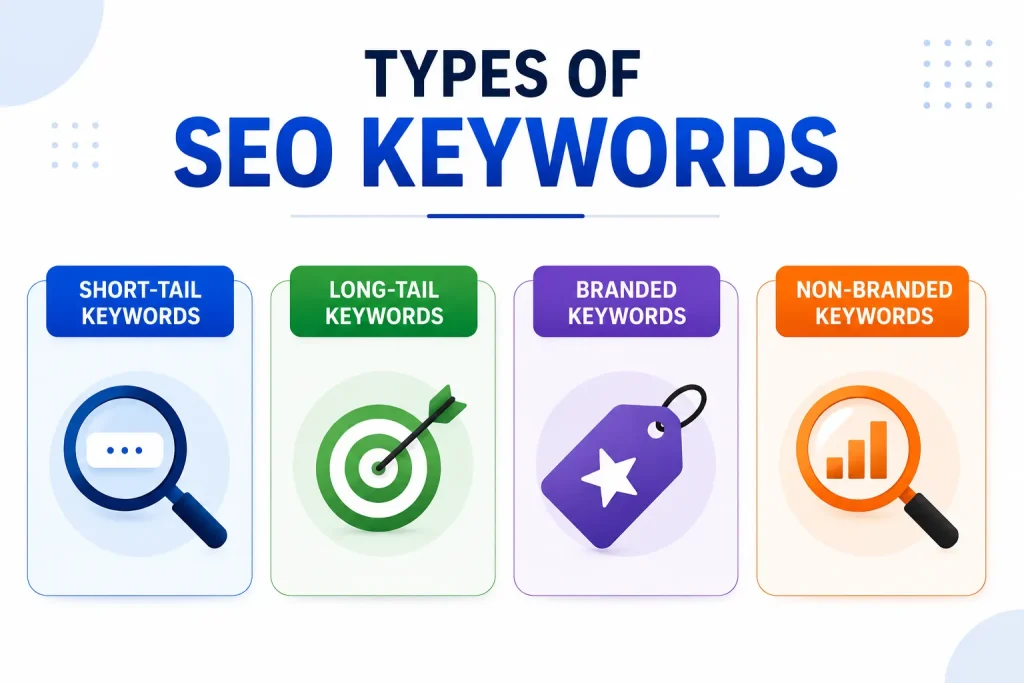
Types of SEO Keywords: A Guide to Choosing the Right Keywords

Understanding the types of SEO keywords is essential for creating content that matches what people are actually searching for. Keywords are not all used for the same purpose. Some users want information, some want to compare options, and others are ready to take action. By understanding different SEO keyword categories, businesses can create more relevant content, improve search visibility, and attract audiences with the right intent. In This Article What Are SEO Keywords? SEO keywords are words and phrases that people enter into search engines when looking for information, products, services, or solutions. Search engines use many signals to understand content, but keywords still help communicate the main topic and user intent of a page. The right keyword should match both the content topic and the reason behind the user’s search. Types of Search Keywords Based on Intent One of the most important ways to classify keywords is by search intent. Informational keywords are used when someone wants to learn something. Examples include “what is SEO“ or “how does keyword research work.” Navigational keywords are used when users want to find a specific website, brand, or page. Commercial investigation keywords are used when people are comparing options before making a decision. Searches such as “best SEO agency” or “SEO services” often fall into this category. Transactional keywords show a stronger intention to take action, such as purchasing a product, requesting a service, or contacting a business. Understanding these types of search keywords helps businesses create content that better matches user expectations. SEO Keyword Categories Based on Length Keywords can also be grouped by their length and level of specificity. Short-tail keywords are broad search terms, usually containing one or two words. For example, “SEO“ is a broad keyword with many possible meanings and search intentions. Long-tail keywords are longer and more specific phrases, such as “types of SEO keywords for small businesses.” These keywords often provide clearer context about what the user wants. Long-tail keywords can be useful for creating focused content around specific questions, needs, and topics. Branded and Non-Branded Keywords Another important category includes branded and non-branded keywords. Branded keywords include a company, product, or service name. Users searching for these terms usually already know about the brand. Non-branded keywords describe a general product, service, problem, or topic without mentioning a specific business. For example, “SEO services” is a non-branded search term. A balanced keyword strategy can use both categories depending on whether the goal is to build awareness, attract new audiences, or support existing brand searches. How to Choose the Right Type of SEO Keyword Choosing the right keywords starts with understanding your target audience, business goals, and search intent. Focus on finding relevant keywords that genuinely connect with your products, services, or content. When learning how to find target keywords, consider what questions customers ask and what information they need at different stages of their decision-making process. Effective keyword research should help you create useful, focused content rather than simply adding popular phrases to a page. Frequently Asked Questions Q1. What are the main types of SEO keywords? Ans: The main types of SEO keywords can be categorized by search intent, length, specificity, and branding. Q2. What is the difference between short-tail and long-tail keywords? Ans: Short-tail keywords are broad and general, while long-tail keywords are more specific and provide clearer context about what the user is searching for. Q3. Why is search intent important when choosing keywords? Ans: Search intent helps you understand what the user expects to find. Matching content with intent can improve relevance and user experience. Q4. Which SEO keyword type is best? Ans: There is no single best keyword type. The right choice depends on your business goals, audience, content topic, and search intent. Conclusion Understanding the different types of SEO keywords helps businesses plan content around real search behavior. By considering intent, specificity, and relevance, you can build a more focused keyword strategy and create content that better serves your audience. Build a More Effective Keyword Strategy for Your Business Choosing the right keywords requires more than selecting popular search terms. A professional SEO strategy should consider search intent, audience needs, content relevance, and business goals. TVM Info Solutions provides professional Search Engine Optimization (SEO) support to help businesses develop stronger search strategies and improve their digital visibility. ๐Ÿ“ž Call Us: +919004590039๐Ÿ“ง Email: contact@tvminfo.com Our Business Automation Solutions: ๐Ÿ’ฌ ChatKar โ€“ Turn WhatsApp chats into sales: https://chatkar.com/๐ŸŒŸ StarCreator โ€“ Build AI automations: https://starcreator.co/๐Ÿ“ง AutoMailSend โ€“ Own your email marketing: https://automailsend.com/๐ŸŽฏ AttractLead โ€“ Capture & convert leads automatically: https://attractlead.in/

How to Do Keyword Research for SEO
SEO

How to Do Keyword Research for SEO: A Practical Step-by-Step Guide

Keyword Research for SEO is the process of discovering the words and phrases people use when searching for information, products, or services online. Effective research helps businesses understand search intent, create relevant content, and target topics that match what their audience actually wants. Knowing how to conduct keyword research is an essential part of building a strong SEO strategy. This guide explains the practical steps involved, from understanding your audience to selecting the right keywords for your website. In This Article Understand Your Audience and Search Intent The first step in Keyword Research for SEO is understanding who you want to reach and what they are searching for. Think about the questions your potential customers may ask. For example, someone searching for โ€œbest SEO servicesโ€ may be looking for a service provider, while someone searching for โ€œwhat is SEOโ€ wants information. Understanding this difference helps you create content that matches the user’s search intent. Before selecting keywords, consider whether the search is informational, commercial, navigational, or transactional. Start Finding Relevant Keywords Begin with broad topics related to your business, products, services, or industry. These topics can become your starting points for finding relevant keywords. For example, an SEO agency might begin with topics such as: From these broad ideas, you can discover more specific search terms and questions. Look for variations, related phrases, and long-tail keywords that reflect what users genuinely want to know. Use Keyword Research Tools to Expand Ideas Keyword research tools can help you discover additional keyword opportunities and understand how people search for specific topics. These tools can be useful for identifying: However, tools should support your decision-making rather than replace it. A keyword may appear attractive based on data, but it should still be relevant to your business and audience. Analyze Keywords Before Choosing Your Targets Knowing how to find target keywords involves more than collecting a large list of phrases. Each keyword should be evaluated based on its relevance and the type of content required to satisfy the search. Ask these questions: A strong keyword research strategy focuses on relevance and user needs rather than simply targeting the highest-volume terms. Turn Keyword Research Into an SEO Content Strategy The final step in the keyword research process is organizing your selected keywords into useful topics and content opportunities. Group related keywords together and create content that answers the main topic comprehensively. Avoid creating separate pages for every small keyword variation when they have the same search intent. Good keyword research steps help businesses plan website pages, blog articles, and SEO content more strategically. The goal is to create useful content that clearly addresses what users are searching for. Frequently Asked Questions 1. What is the first step in keyword research? The first step is understanding your target audience, business topics, and the search intent behind the information your potential customers may be looking for. 2. Which tools can be used for keyword research? Various keyword research tools can help identify keyword ideas, related searches, trends, and search behavior. The right tool depends on your research requirements and SEO strategy. 3. How do I know which keywords to target? Choose keywords based on relevance, search intent, business goals, and your ability to create genuinely useful content around the topic. 4. Why is keyword research important for SEO content? The importance of keyword research lies in helping businesses understand what their audience is searching for, allowing them to create more relevant and well-focused content. Conclusion Effective Keyword Research for SEO begins with understanding people, not simply collecting search terms. By identifying audience needs, analyzing search intent, finding relevant keywords, and organizing them into useful topics, businesses can build a stronger foundation for their SEO efforts. A well-planned keyword strategy supports more relevant content, clearer website structure, and better alignment between what users search for and what your business provides. Build a Stronger SEO Strategy With Professional Keyword Research For businesses that need a structured approach to keyword research, content planning, and Search Engine Optimization, professional support can help create a strategy aligned with real business goals and audience needs. TVM Info Solutions provides professional SEO support to help businesses strengthen their search visibility through strategic optimization and relevant digital marketing solutions. ๐Ÿ“ž Call Us: +919004590039๐Ÿ“ง Email: contact@tvminfo.com Our Business Automation Solutions: ๐Ÿ’ฌ ChatKar โ€“ Turn WhatsApp chats into sales: https://chatkar.com/๐ŸŒŸ StarCreator โ€“ Build AI automations: https://starcreator.co/๐Ÿ“ง AutoMailSend โ€“ Own your email marketing: https://automailsend.com/๐ŸŽฏ AttractLead โ€“ Capture & convert leads automatically: https://attractlead.in/

Why Is Keyword Research Important for SEO A Complete Guide
SEO

Why Is Keyword Research Important for SEO? A Complete Guide

Keyword research is important for SEO because it helps businesses understand what their target audience is actually searching for online. Instead of creating content based on assumptions, businesses can use search terms and user intent to build pages that are more relevant to potential customers. A strong keyword research strategy supports better content planning, improves topical relevance, and helps businesses identify valuable opportunities in search results. This article explains the role of keyword research in SEO, why it matters, and how it supports long-term organic visibility. In This Article What Is the Role of Keyword Research in SEO? Keyword research is the process of identifying the words, phrases, and questions people use when searching on Google and other search engines. The goal is not simply to find popular keywords. Effective SEO keyword research helps businesses understand search intent, competition, relevance, and the topics their audience wants information about. For example, someone searching for โ€œbest digital marketing agencyโ€ may have a different intent from someone searching for โ€œwhat is digital marketing?โ€ Understanding this difference helps businesses create content that better matches the user’s needs. Keyword Research Helps You Understand Search Intent One of the main reasons keyword research matters is that it reveals what users expect from a search. Keywords can indicate whether someone is looking for: When businesses understand this intent, they can create the right type of content. An informational search may require a detailed guide, while a commercial search may require a focused service page. This makes keyword selection more strategic and helps improve the overall user experience. How Keyword Research Improves Your Content Strategy A well-planned keyword research strategy provides direction for website content. It can help identify: Rather than publishing disconnected content, businesses can build a structured content strategy around related topics. This also supports stronger topical relevance, making it easier for search engines and users to understand what a website is about. The Key Benefits of Keyword Research for Businesses The importance of keyword research extends beyond rankings. It helps businesses make better decisions about where to focus their content and SEO efforts. Some important benefits include: Using reliable keyword research tools can also help marketers compare keyword ideas and organize opportunities based on relevance and business goals. However, keyword data should always be combined with human understanding of the audience. Building an Effective Keyword Research Process An effective keyword research process usually starts with understanding the business, its services, customers, and goals. The next steps include identifying relevant topics, researching search terms, analyzing search intent, and selecting keywords that genuinely match the page’s purpose. The best keyword research techniques focus on relevance rather than simply choosing the highest-volume keyword. A keyword should support the user’s needs and the business objective behind the content. Frequently Asked Questions 1. Why is keyword research important for SEO? Keyword research is important for SEO because it helps businesses understand what users search for and create relevant content around those needs. 2. What are keyword research tools used for? Keyword research tools help identify keyword ideas, related search terms, and potential opportunities for content planning and SEO. 3. How does keyword research affect content strategy? It helps businesses choose relevant topics, understand search intent, identify customer questions, and organize content around meaningful subjects. 4. Should businesses target only high-volume keywords? No. High search volume does not always mean a keyword is the best choice. Relevance and search intent are often more important for attracting the right audience. Conclusion Keyword research provides the foundation for a focused and relevant SEO strategy. By understanding what people search for and why they search for it, businesses can create content that better serves their audience and supports stronger long-term search visibility. Build a More Strategic SEO Foundation With Professional Support Effective keyword research requires more than collecting a list of popular search terms. Businesses need to understand search intent, audience relevance, content opportunities, and SEO priorities. TVM Info Solutions provides professional Search Engine Optimization (SEO) support to help businesses build more focused strategies for improving their online visibility and creating relevant digital content. ๐Ÿ“ž Call Us: +919004590039๐Ÿ“ง Email: contact@tvminfo.com Our Business Automation Solutions: ๐Ÿ’ฌ ChatKar โ€“ Turn WhatsApp chats into sales: https://chatkar.com/๐ŸŒŸ StarCreator โ€“ Build AI automations: https://starcreator.co/๐Ÿ“ง AutoMailSend โ€“ Own your email marketing: https://automailsend.com/๐ŸŽฏ AttractLead โ€“ Capture & convert leads automatically: https://attractlead.in/

Scroll to Top