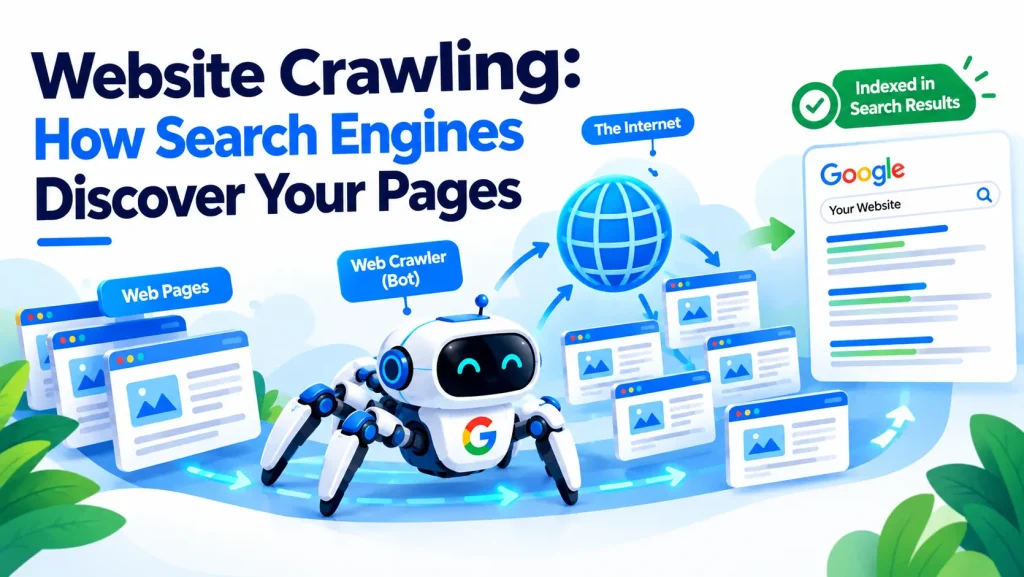
Website Crawling is the process through which search engine crawlers discover and access pages on a website. Before a page can be considered for indexing, a crawler such as Googlebot needs to find and fetch it. Understanding crawling helps website owners identify technical issues that may prevent important pages from being discovered.
This article explains what website crawling means, how search engines crawl websites, what affects crawlability in SEO, common crawling issues, and practical ways to improve crawling.
In This Article
- What website crawling means
- How search engines crawl websites
- Factors affecting crawlability
- Common crawling issues
- Ways to improve website crawling
What Is Website Crawling?
Website crawling is the process of using automated programs, commonly called crawlers, bots, or spiders, to discover and access web pages. Search engines use these crawlers to explore links, fetch page content, and identify new or updated URLs.
For example, Google crawling uses Googlebot to discover content across websites. Crawling and indexing are related but different: crawling involves discovering and accessing a page, while indexing involves processing and storing information about pages that may be eligible to appear in search.
How Do Search Engines Crawl Websites?
Search engines discover URLs through links, sitemaps, and other signals. When a crawler visits a page, it can follow relevant links to discover additional URLs and fetch their content.
A website’s robots.txt file can provide instructions about which areas crawlers may or may not access. Internal links also create pathways between pages, helping crawlers discover related content.
However, crawling does not guarantee that a page will be indexed. Search engines evaluate discovered pages separately for indexing and potential search visibility.
What Affects Crawlability in SEO?
Crawlability in SEO depends on how easily search engine crawlers can access important pages and resources. Key factors include:
- Robots.txt: Incorrect rules can unintentionally restrict crawler access.
- Internal links: Well-connected pages are easier to discover.
- XML sitemap: A useful sitemap can help search engines identify important URLs.
- HTTP status codes: Broken or inaccessible pages can create crawling problems.
- Redirects: Unnecessary redirect chains can make crawling less efficient.
- Website structure: Clear navigation helps crawlers reach important content.
Common Website Crawling Issues
Common web crawling problems include blocked pages, broken links, incorrect robots.txt rules, redirect chains, server errors, and orphan pages. An orphan page has no useful internal links pointing to it, which can make discovery more difficult.
Larger websites may also require closer attention because they can contain many URLs, filters, parameters, or frequently changing pages. Regular technical reviews can help identify pages that are difficult for crawlers to reach.
How to Improve Website Crawling
Start by checking whether important pages are accessible and connected through relevant internal links. Review robots.txt, XML sitemaps, redirects, internal links, and HTTP status codes regularly.
A practical technical SEO review should also identify broken links, inaccessible resources, and unnecessary URL variations. After making changes, recheck affected pages and monitor available crawling and indexing signals.
Frequently Asked Questions
Q1. What is website crawling in SEO?
Ans: Website crawling is the process through which search engine crawlers discover and access website pages and their resources.
Q2. What is the difference between crawling and indexing?
Ans: Crawling involves discovering and accessing a page. Indexing involves processing and storing information about a page so it can potentially appear in search results.
Q3. How can I improve crawlability in SEO?
Ans: Maintain clear internal links, a useful XML sitemap, correct robots.txt rules, working URLs, and a logical website structure. Regular technical SEO reviews can also identify crawling issues.
Q4. Does crawling mean a page will rank on Google?
Ans: No. Crawling does not guarantee indexing or rankings. A page must meet search engine requirements and compete with other relevant content to appear in search results.
Conclusion
Understanding website crawling is an important part of technical SEO. When important pages are accessible, logically connected, and free from unnecessary technical barriers, search engines can discover website content more efficiently. Regular checks of crawlability, links, sitemaps, redirects, and server responses can help maintain a stronger technical foundation.
Need Professional Support With Website Crawlability?
Crawling issues can become difficult to identify on larger or frequently updated websites. TVM Info provides SEO Services to help businesses review website issues and strengthen their search foundation.
📞 Call Us: +919004590039
📧 Email: contact@tvminfo.com
Our Business Automation Solutions:
💬 ChatKar – Turn WhatsApp chats into sales
🌟 StarCreator – Build AI automations
📧 AutoMailSend – Own your email marketing
🎯 AttractLead – Capture & convert leads automatically