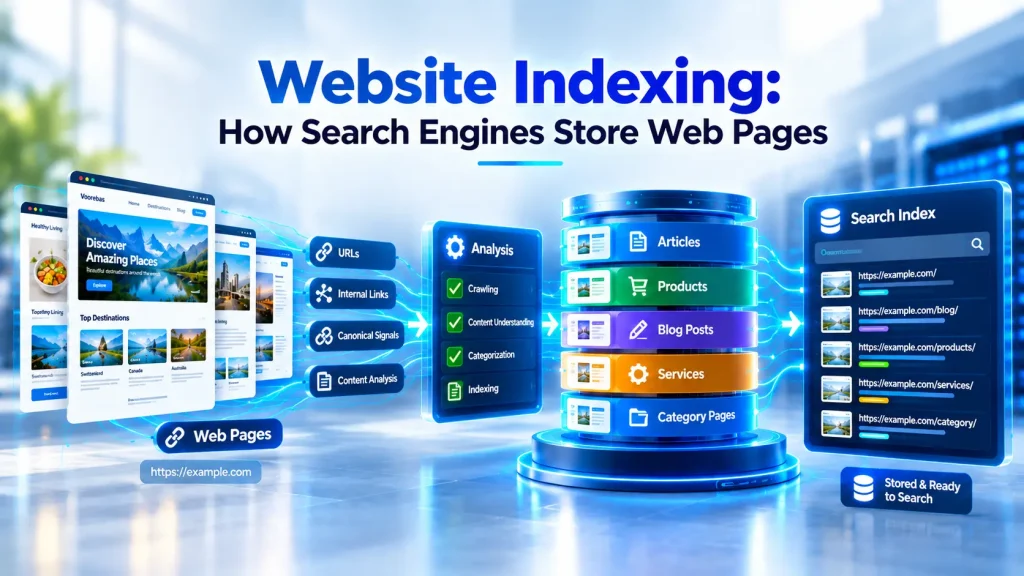
Website Indexing is the process through which a search engine processes information from a discovered webpage and stores it in its search index. When people search online, search engines can consider relevant pages from this index for their results.
Understanding website indexing is important for website owners because a page needs to be accessible, crawlable, and eligible for indexing before it can potentially appear in organic search. This article explains what website indexing means, how search engines index websites, what affects indexability, common indexing issues, and how to check important pages.
In This Article
- What website indexing means
- How search engines index websites
- Factors affecting website indexability
- Common indexing problems
- How to check and improve indexing
What Is Website Indexing?
Website indexing is the process of analyzing and storing information about webpages in a search engine’s index. After a search engine discovers and crawls a URL, it processes the page’s content and technical signals to understand what the page is about and whether it is eligible for indexing.
This is different from crawling. Crawling involves discovering and accessing a page, while indexing involves processing and storing information about that page. A crawled page is not automatically guaranteed to be indexed.
How Do Search Engines Index Websites?
Search engines use automated systems to discover URLs, crawl accessible pages, analyze their content, and add eligible information to their index. During this process, they can consider page content, links, canonical signals, metadata, and other technical information.
For example, Google indexing can be monitored through Google Search Console. Its Page Indexing report helps website owners understand which URLs have been crawled and indexed and which URLs may have indexing issues.
Understanding how search engines work also helps explain why crawling and indexing should be treated as separate stages of search discovery.
What Affects Website Indexability?
Website indexability refers to whether a page can be processed and included in a search engine’s index. Several technical and content-related factors can affect it:
- Noindex directives: An accidental noindex instruction can prevent an eligible page from being indexed.
- Robots.txt: Crawling restrictions can affect how search engines access URLs and resources.
- Canonical tags: Incorrect canonical signals can influence which URL is treated as the preferred version.
- Duplicate pages: Multiple similar URLs can create unnecessary complexity.
- Internal links: Clear, crawlable links help search engines discover important pages.
- XML sitemaps: A sitemap can provide search engines with a useful list of important URLs.
Common Search Engine Indexing Problems
Common indexing in SEO problems include accidental noindex tags, incorrect canonicalization, duplicate pages, inaccessible content, and weak internal linking.
Problems can also appear after website redesigns, migrations, URL changes, or development updates. A page may be technically available to users but still have signals that prevent or discourage indexing. This makes indexing checks particularly useful after significant website changes.
How to Check and Improve Website Indexing
Start with Google Search Console and review the Page Indexing report. Use URL Inspection when investigating an individual page and checking its current indexing status.
Then review important URLs for indexability, canonical tags, robots.txt rules, noindex directives, internal links, sitemap inclusion, and accessible content. Fix the underlying issue instead of repeatedly requesting indexing without understanding why a page is not being indexed.
Regular technical SEO reviews are especially useful for websites with many pages, frequent updates, or complex URL structures.
Frequently Asked Questions
Q1. What is website indexing in SEO?
Ans: Website indexing is the process of processing and storing information about webpages so eligible pages can potentially appear in search results.
Q2. What is the difference between crawling and indexing?
Ans: Crawling involves discovering and accessing a URL, while indexing involves processing and storing information about the page.
Q3. How can I check if my website is indexed?
Ans: Google Search Console provides indexing reports and URL Inspection tools that can help website owners check individual pages and overall indexing status.
Q4. Does indexing guarantee Google rankings?
Ans: No. Indexing makes an eligible page available for consideration in search, but it does not guarantee rankings or visibility for particular queries.
Conclusion
Website indexing is a key stage between crawling and appearing in search. A technically accessible website, clear internal linking, accurate canonical signals, appropriate index directives, and useful content can provide a stronger foundation for indexability. Regular checks through Search Console can help identify and resolve indexing issues before they affect important pages.
Need Professional Support With Website Indexing?
Indexing issues can become difficult to diagnose when a website has many URLs, technical changes, or complex structures. TVM Info solutions provides professional SEO services, including technical optimization and website audits, to help businesses identify website issues and strengthen their search foundation.
📞 Call Us: +919004590039
📧 Email: contact@tvminfo.com
Our Business Automation Solutions:
💬 ChatKar – Turn WhatsApp chats into sales
🌟 StarCreator – Build AI automations
📧 AutoMailSend – Own your email marketing
🎯 AttractLead – Capture & convert leads automatically